

-
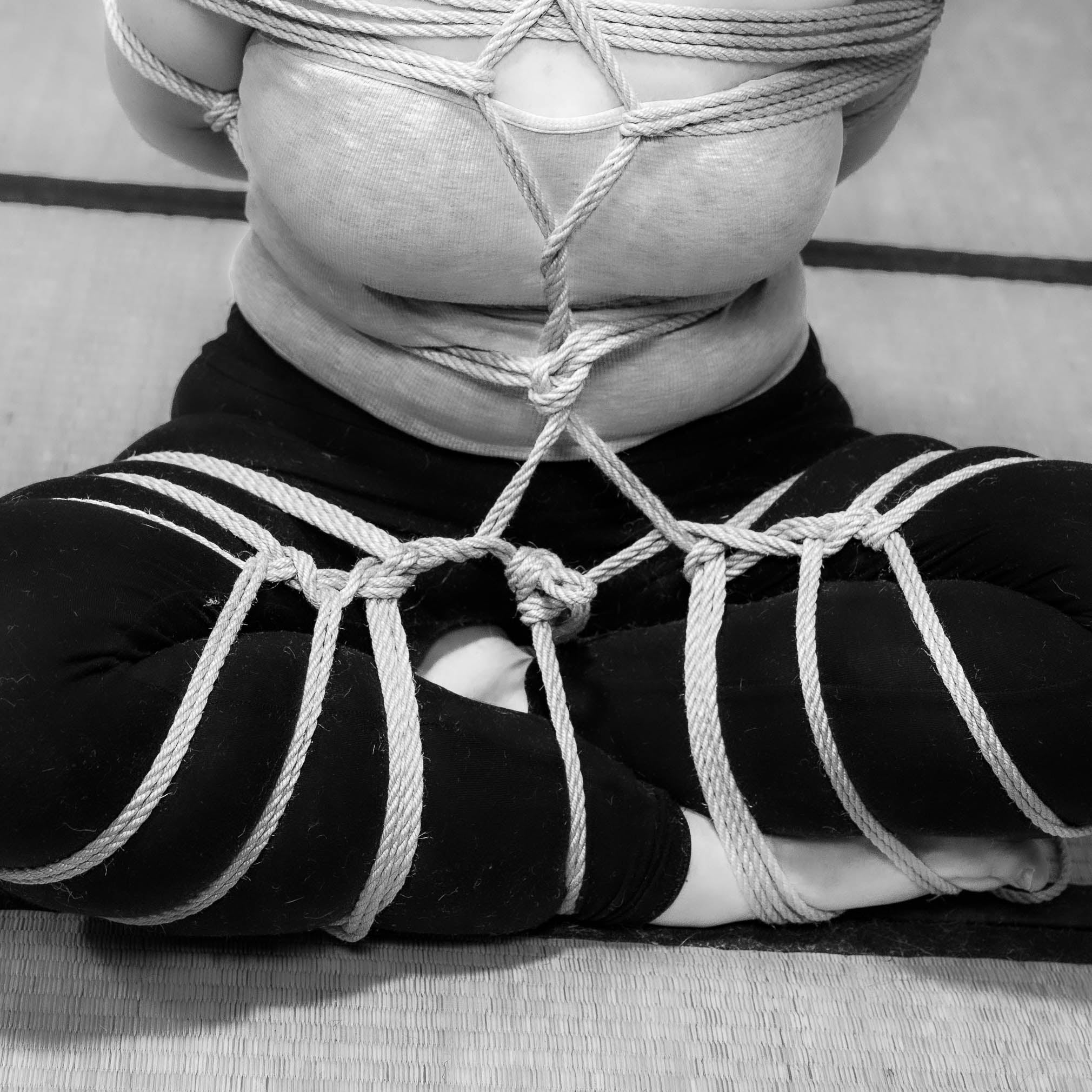
Agoura Shibari あぐら 縛り
Tutorial for basic Agoura ShibariTranslation: Cross legged tie.
Rope used: Single Ply Natural Jute -
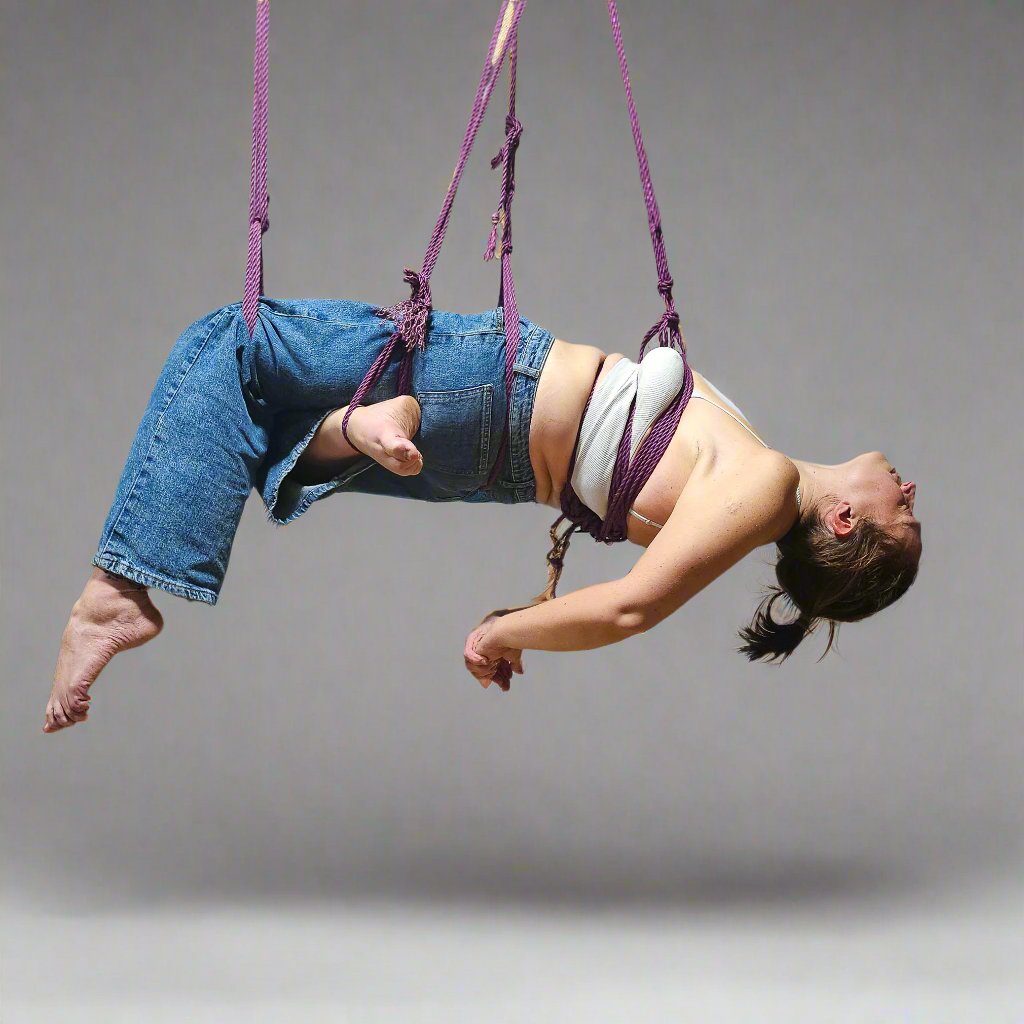
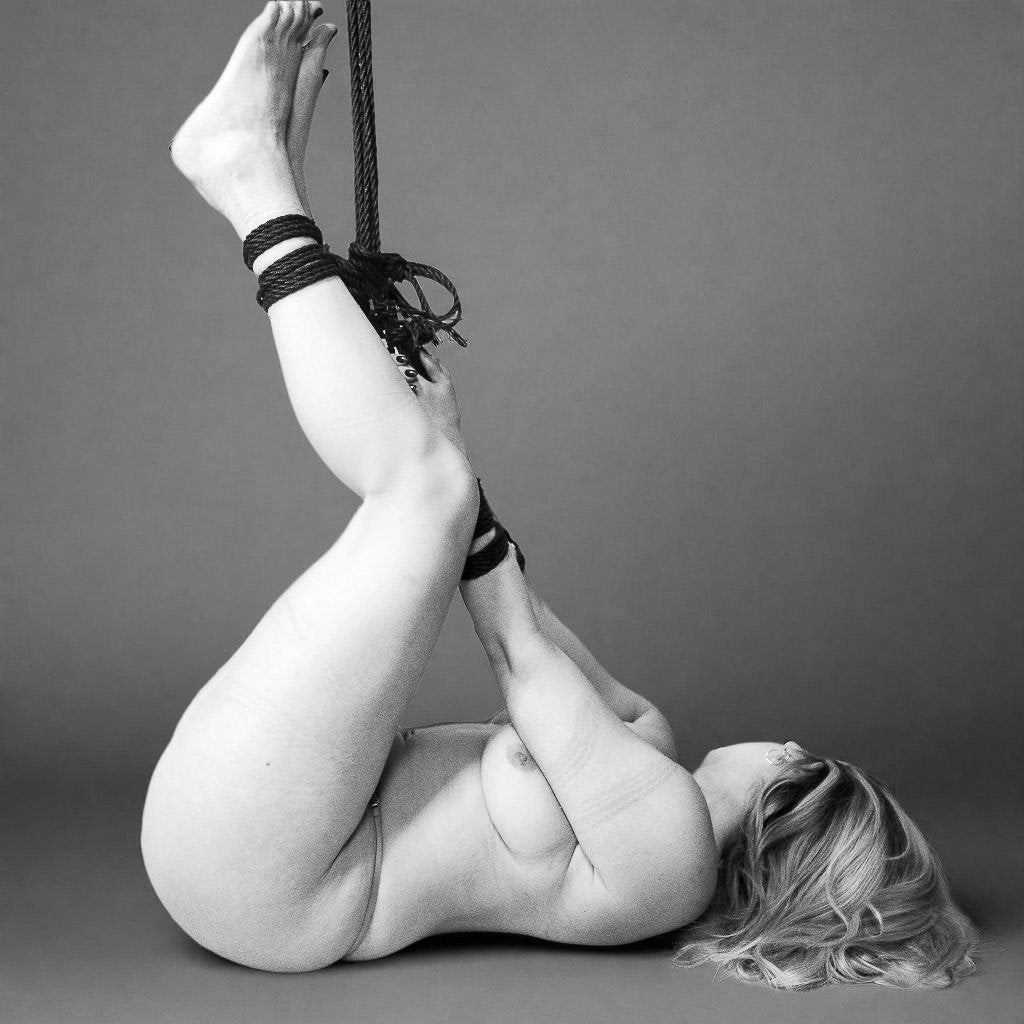
Aomuke zuri 仰向け吊り
Translation: “Face-up suspension.” A suspension in which the person is lifted while facing upward, with the front of the body oriented toward the ceiling or sky. This position creates an open, exposed posture and can be adapted into a wide range of structural forms, from relaxed reclining suspensions to more dynamic or highly tensioned positions.
Rope used: 2ply Violet Jute -

Bo Shibari 棒縛り
Translation: “Pole tie.” A general term for any tie in which a person is bound to a pole, or post.
Rope Used: Blue Twilight Jute -
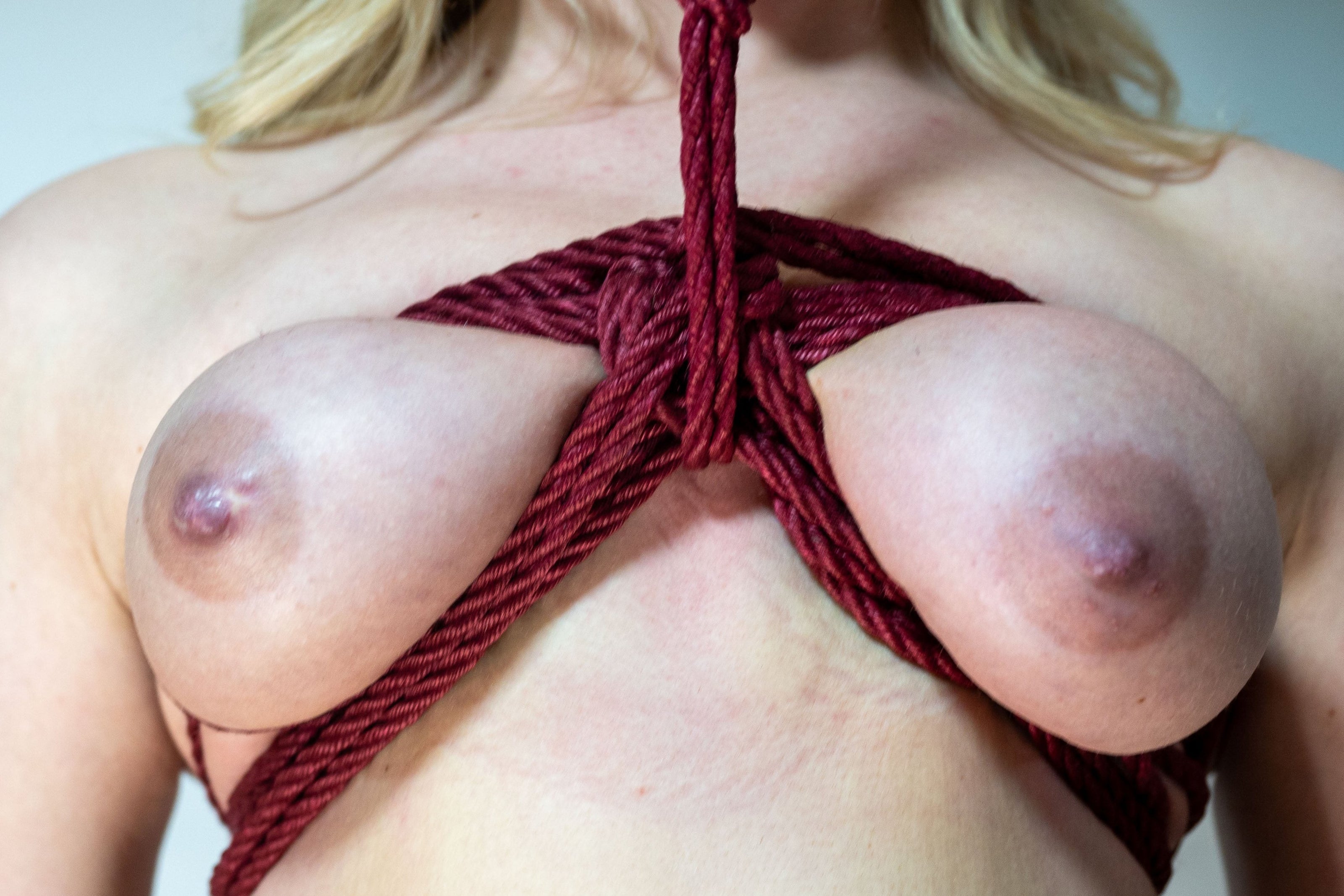
Breast Bondage
ties which squeeze the breasts.
Rope used: Single ply cherry Jute -
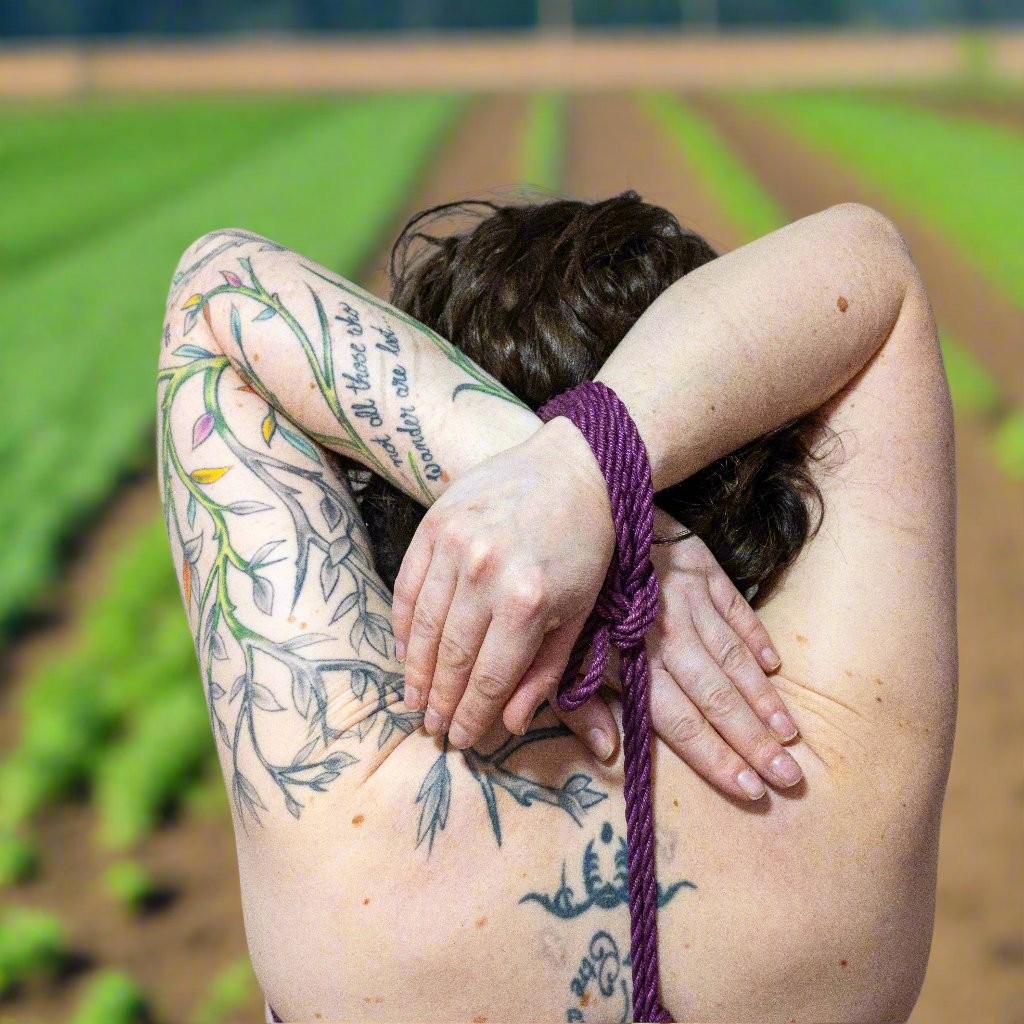
Bunny Ears
Arms tied behind head resulting in the elbows 'looking like rabbit ears'. see also Kouto ushiro te shibari 後頭後手縛 and Koutoubu ryo-tekubi shibari 後頭部両手首縛り
-
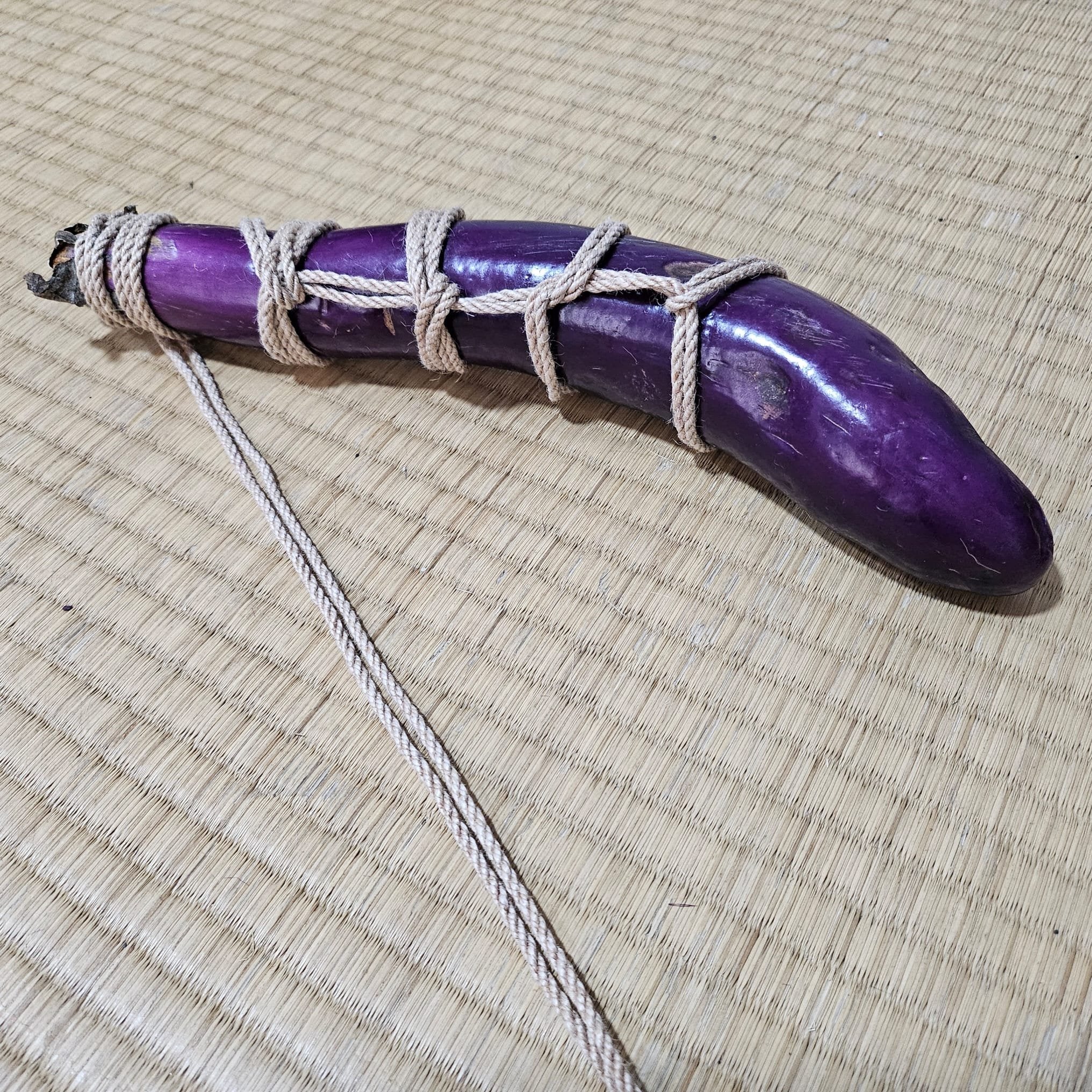
CBT
CBT/Cock&Ball torure and is used to refer to ties of the penis and balls, whether or not they are torturous.
-

Chest Harness
Chest Harness TutorialsRope patterns which go across the chest that do not include the arms.
Rope used: Single Ply Grey Jute -

Chokushin Ushirote Shibari 直進後手縛り
Translation: 'tying hands straight behind the back' This is the Japanese name for the tie more commonly referred to by English speakers as the strapardo in which the arms are brought together behind the back and bound.
Rope used: Double Ply Cherry Jute -
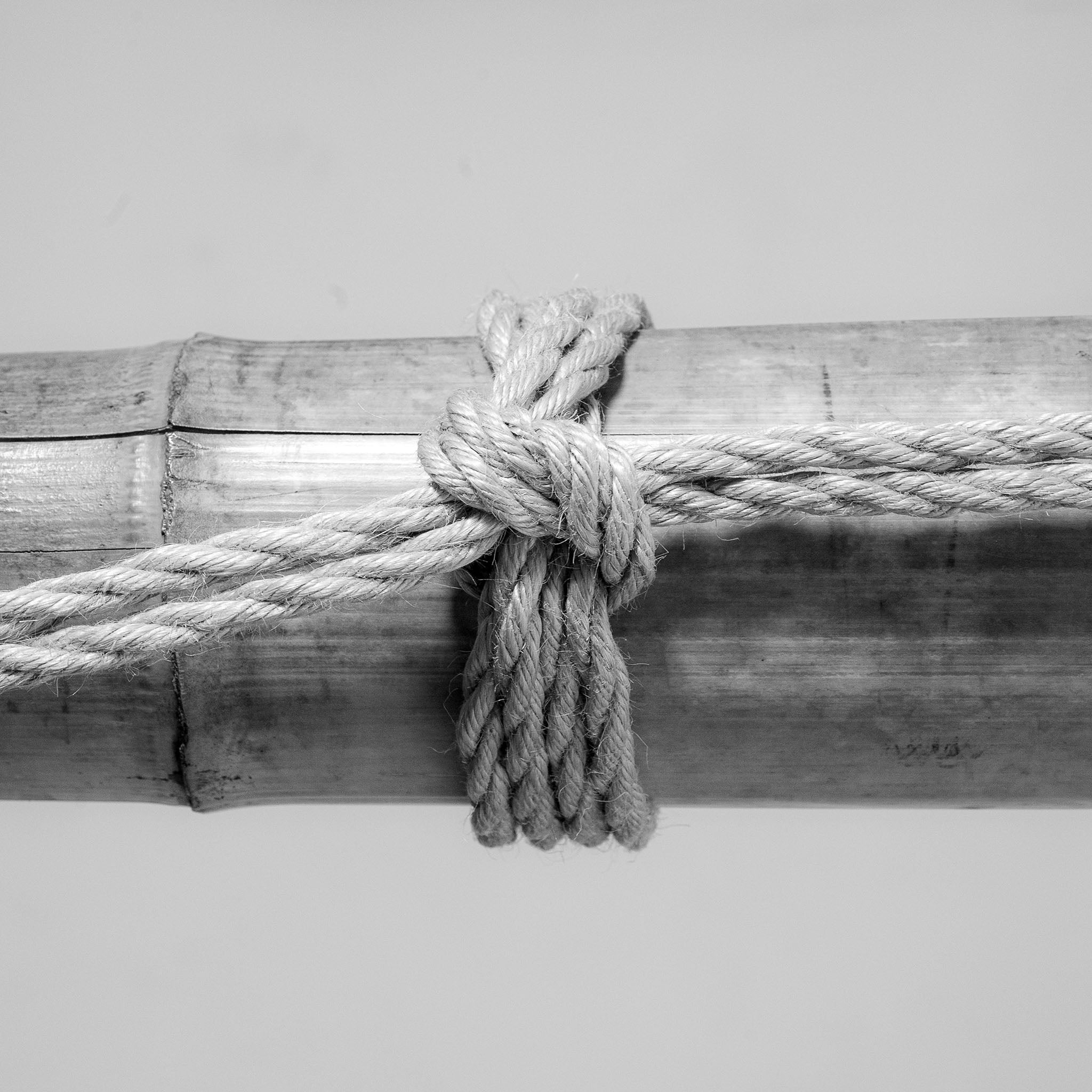
Column Knot/Tie
Single Column Knot Tutorials -
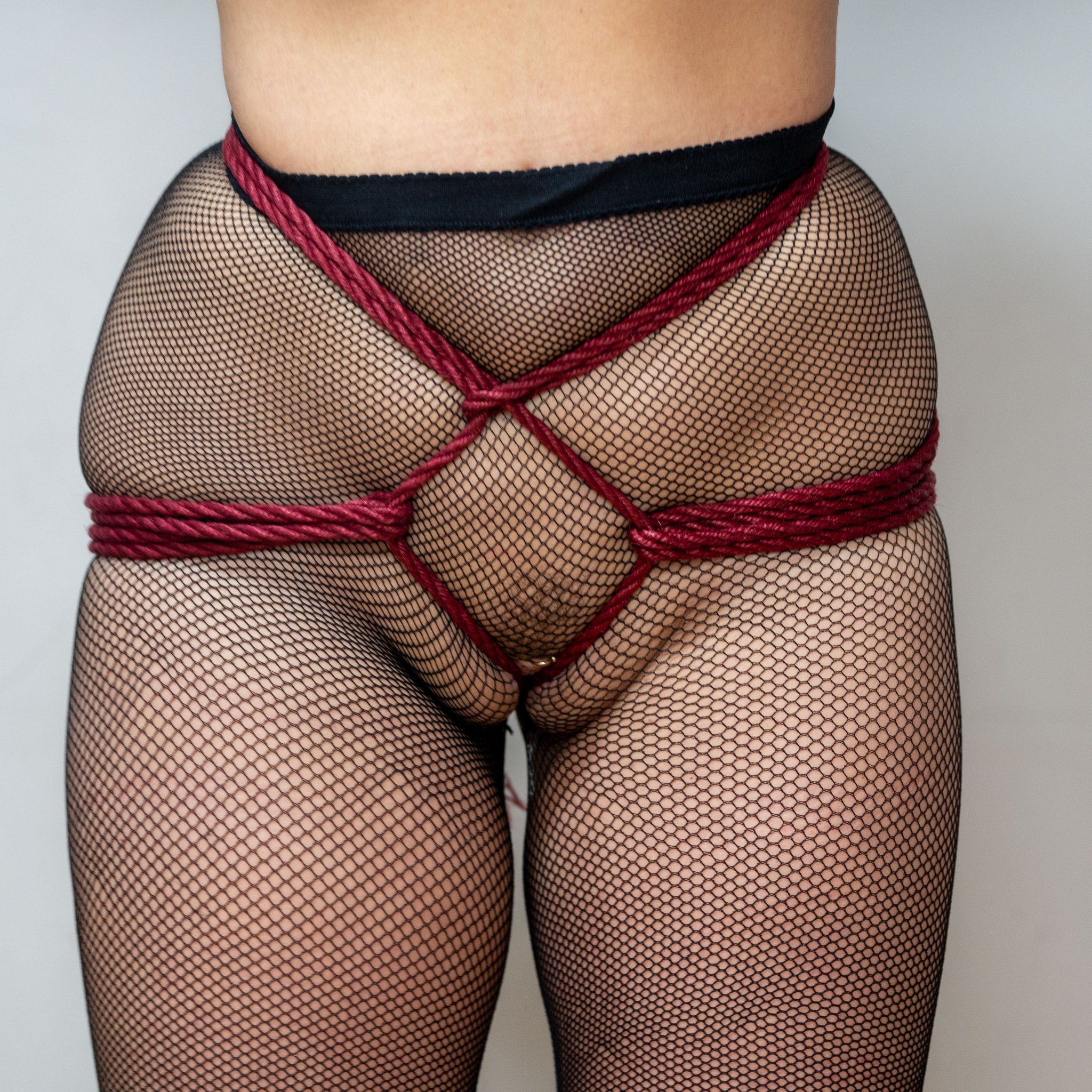
Crotch Rope
rope patterns which go over or apply pressure to the crotch
Rope used: Double Ply Cherry Jute -
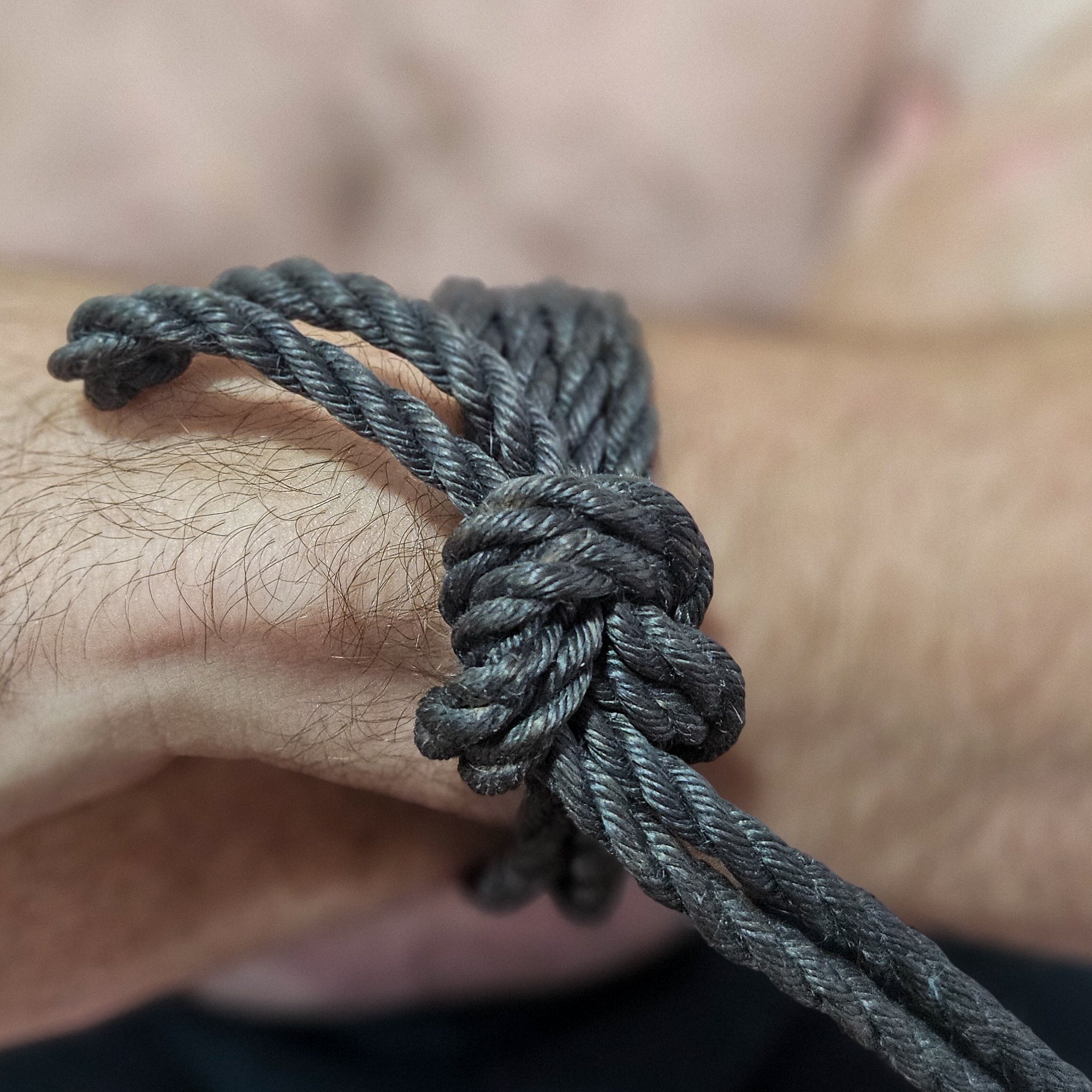
Cuff
Wraps around one or two limbs secured with a single or double column tie.
-
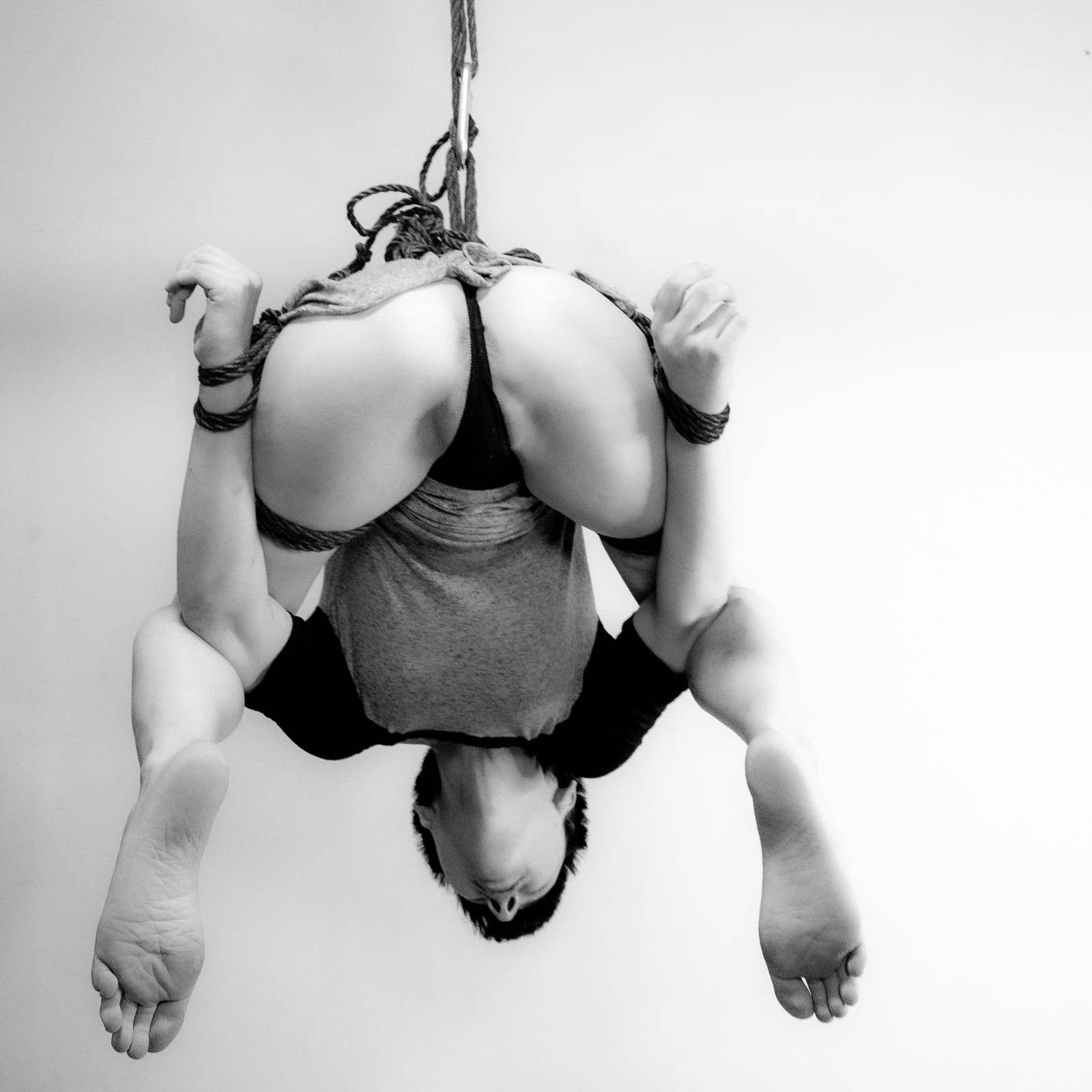
Daruma Shibari 達磨 縛り
Moon Tie
-
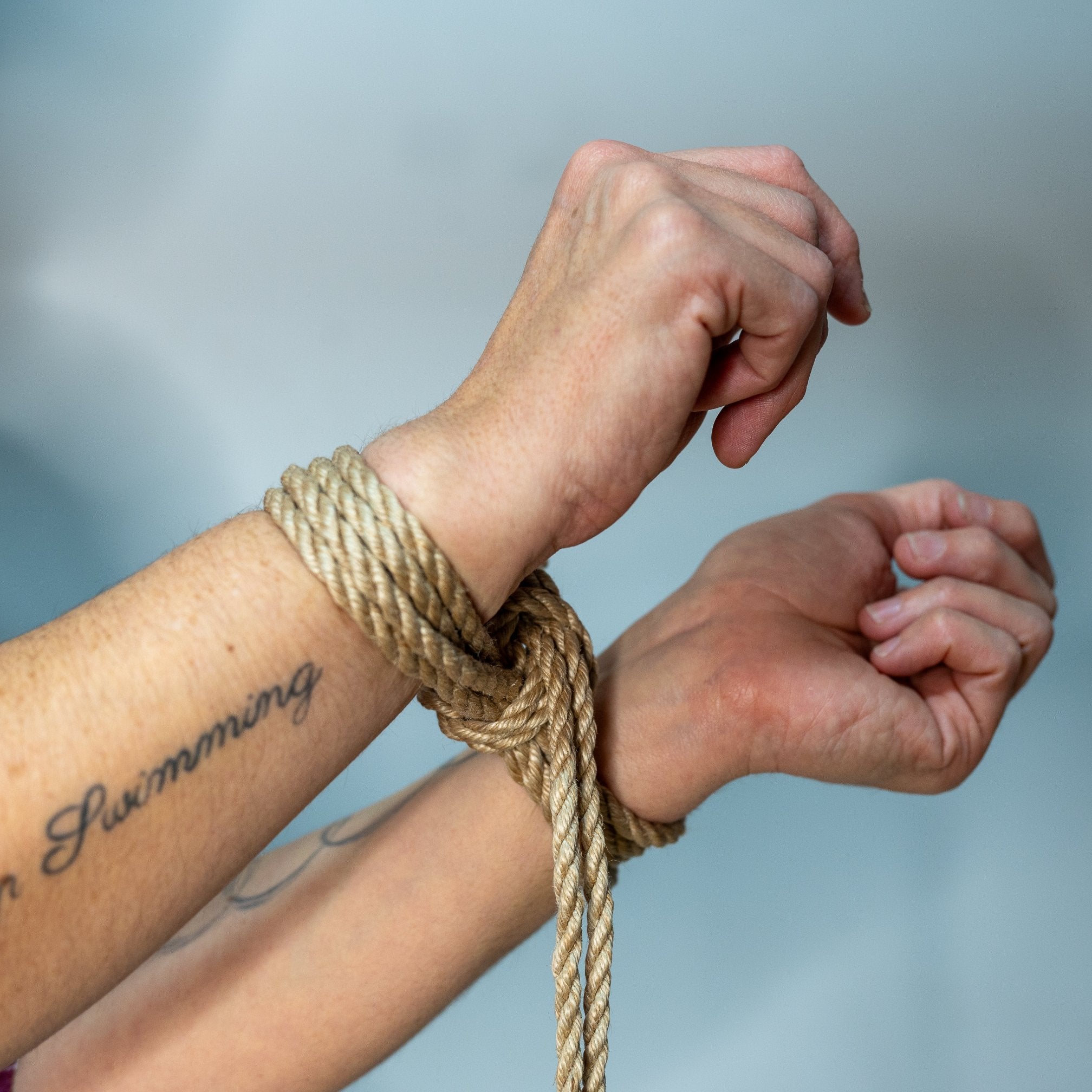
Double Column
Two limbs or things tied together with the rope passing between them before being tied off with a knot.
-
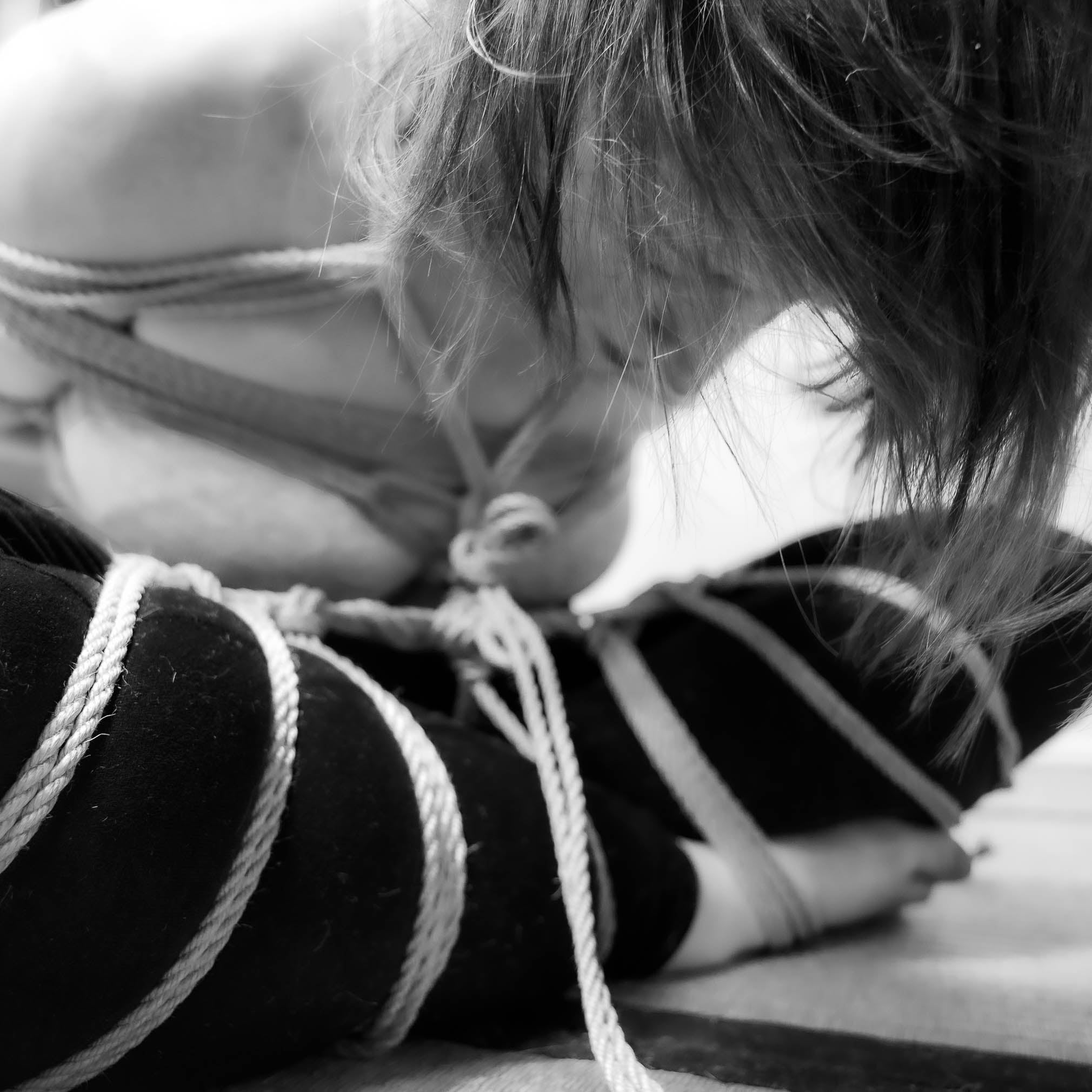
Ebi Shibari 海老縛り
Translation: Shrimp tie - This refers to a tied, bent-over position that creates a silhouette resembling a prawn or shrimp. In Western rope communities, similar rope patterns or positions are sometimes referred to as “forced bows,” reflecting the pronounced forward curve and restrained posture created by the tie.
-
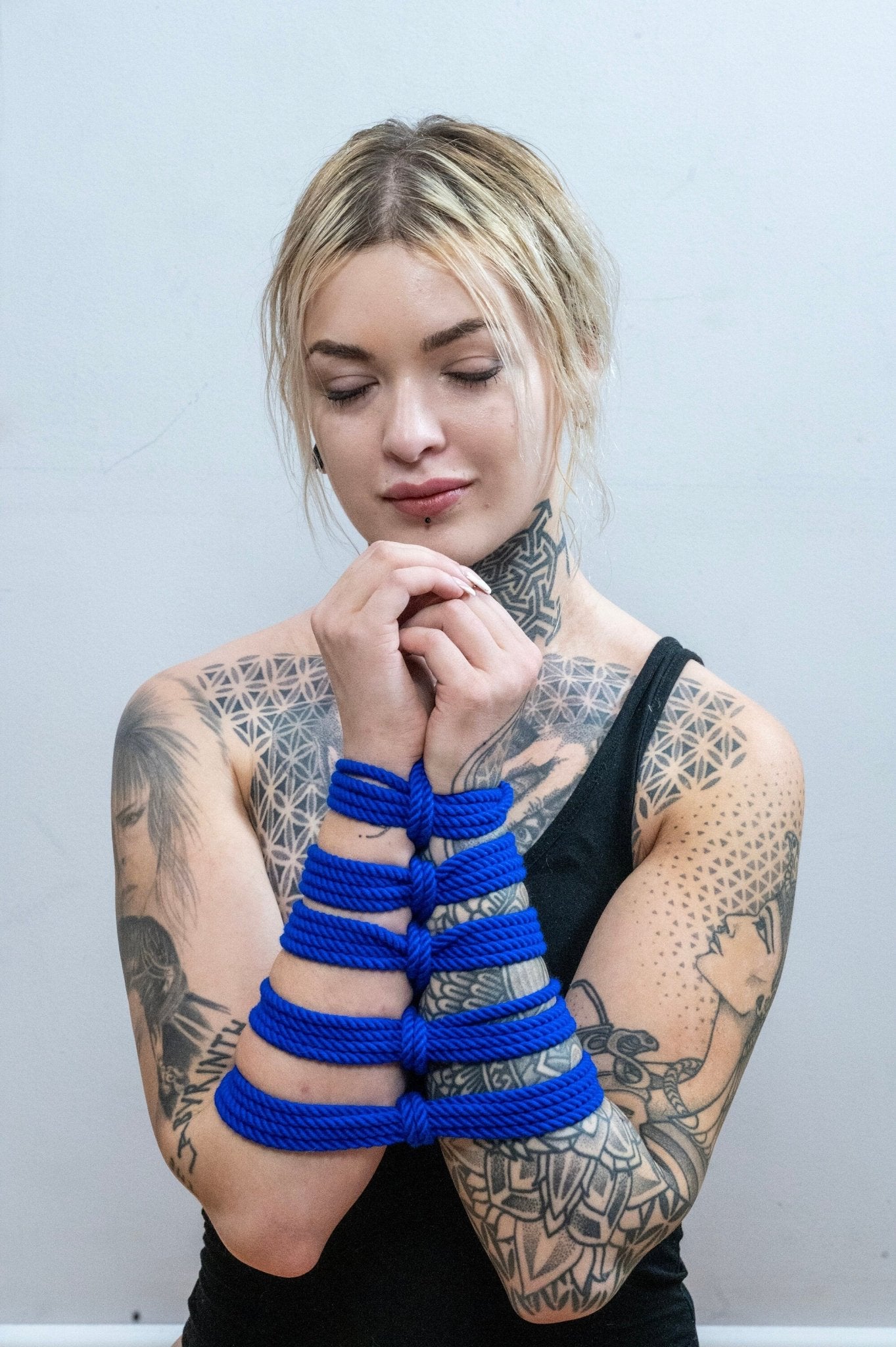
Enchou ude mae te hiji shibari 延長腕前手肘
Translation: Front Elbow Binding
Rope used: Electric Blue Bamboo -

Echou ude mae te shibari 絵長 腕 前 手 縛り
Translation: A tie in which the wrists and arms are bound in front of the body. It is often used interchangeably with Mae Te Shibari (前手縛り), literally meaning “front hand tying,” although the term may also be used more broadly to describe related front-bound variations.
Rope Used: 2 Ply Jute Zorba -
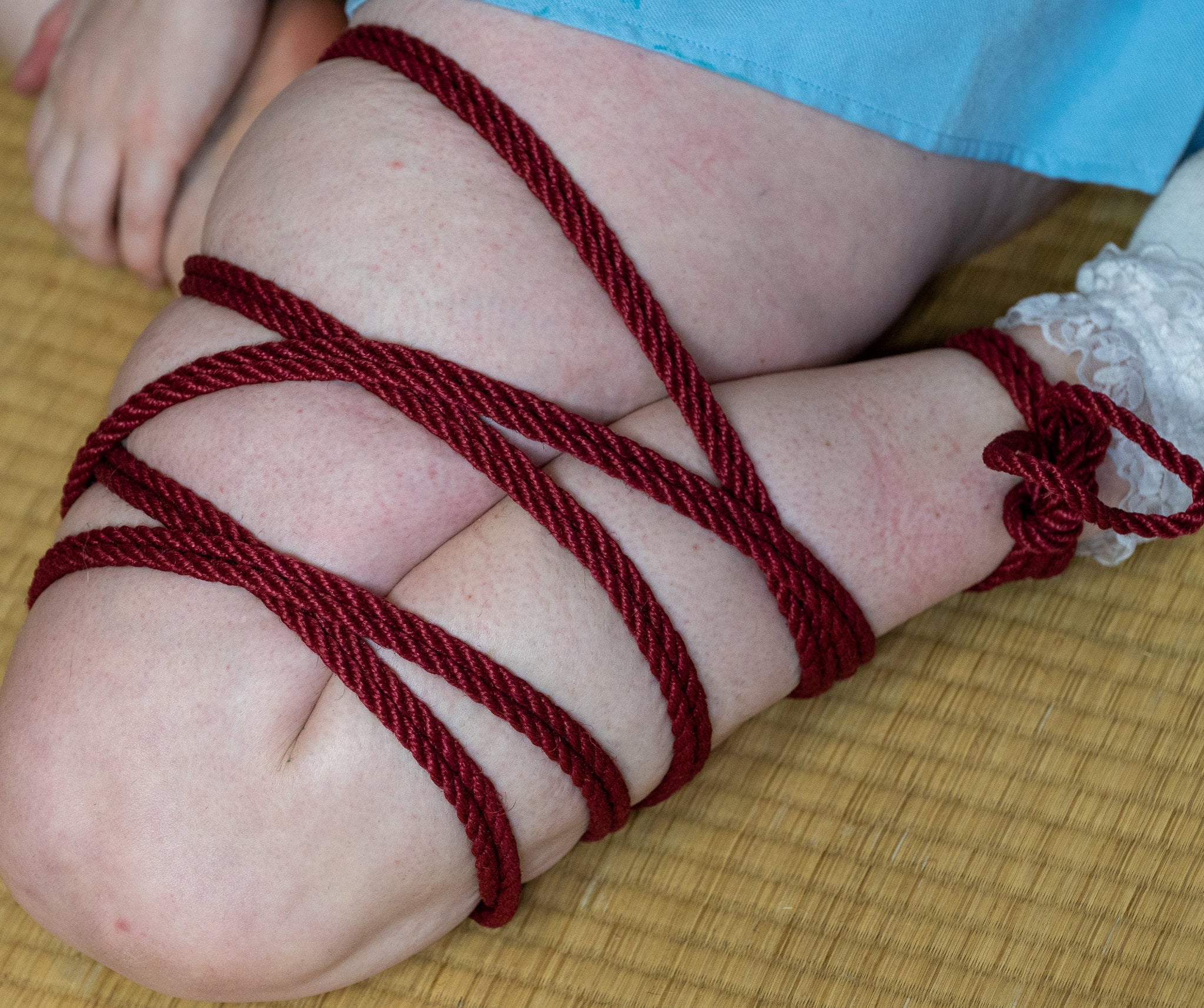
Futomomo Shibari 太腿縛り
Tutoriallit. thigh binding. This refers to ties in which the leg is bent at the knee, and tied to the thigh.
-
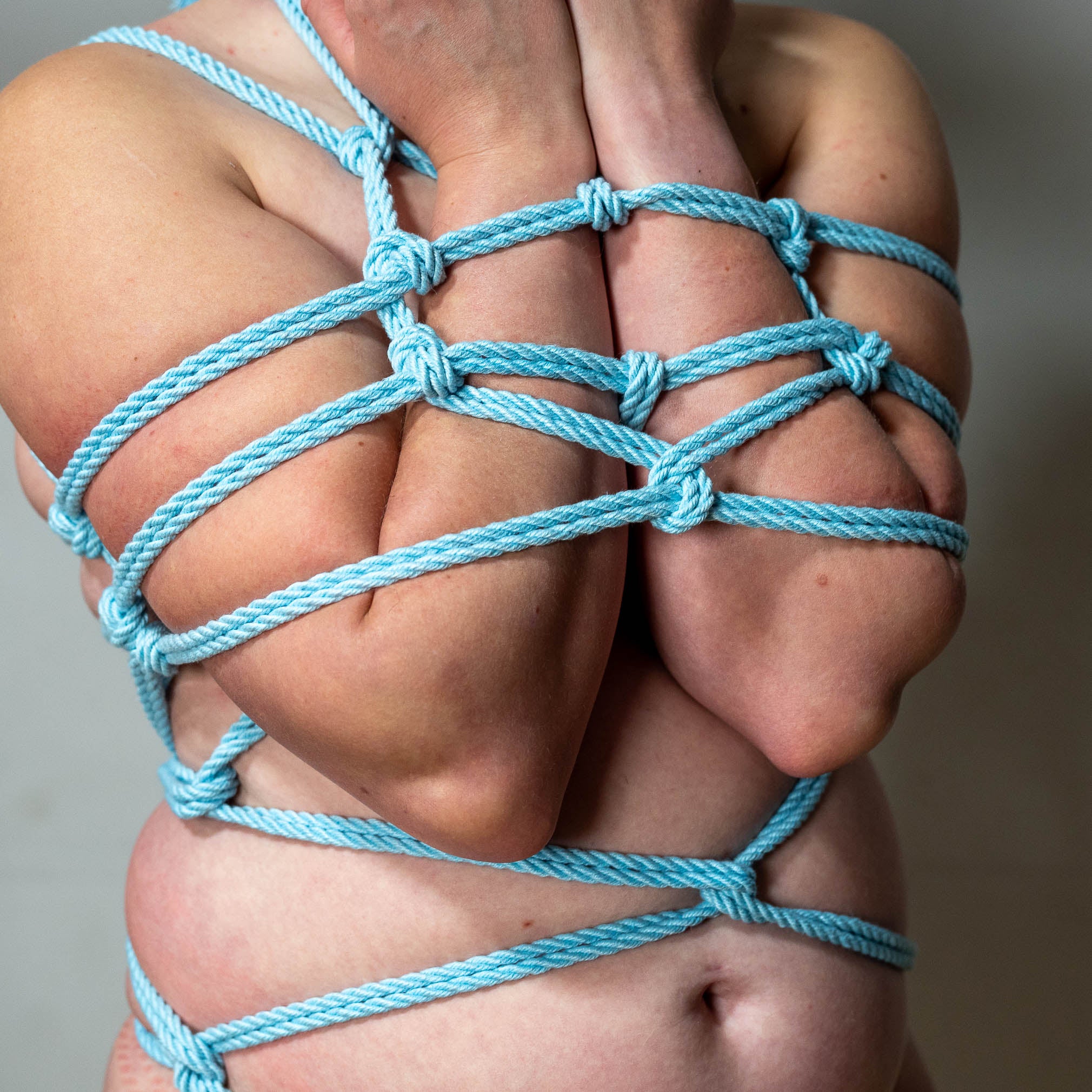
Fisherman's Harness
A tie originally created by Rodolphe and Mathilde now widely copied and adapted with the name being used for its adapted forms as well as the origonal.
-
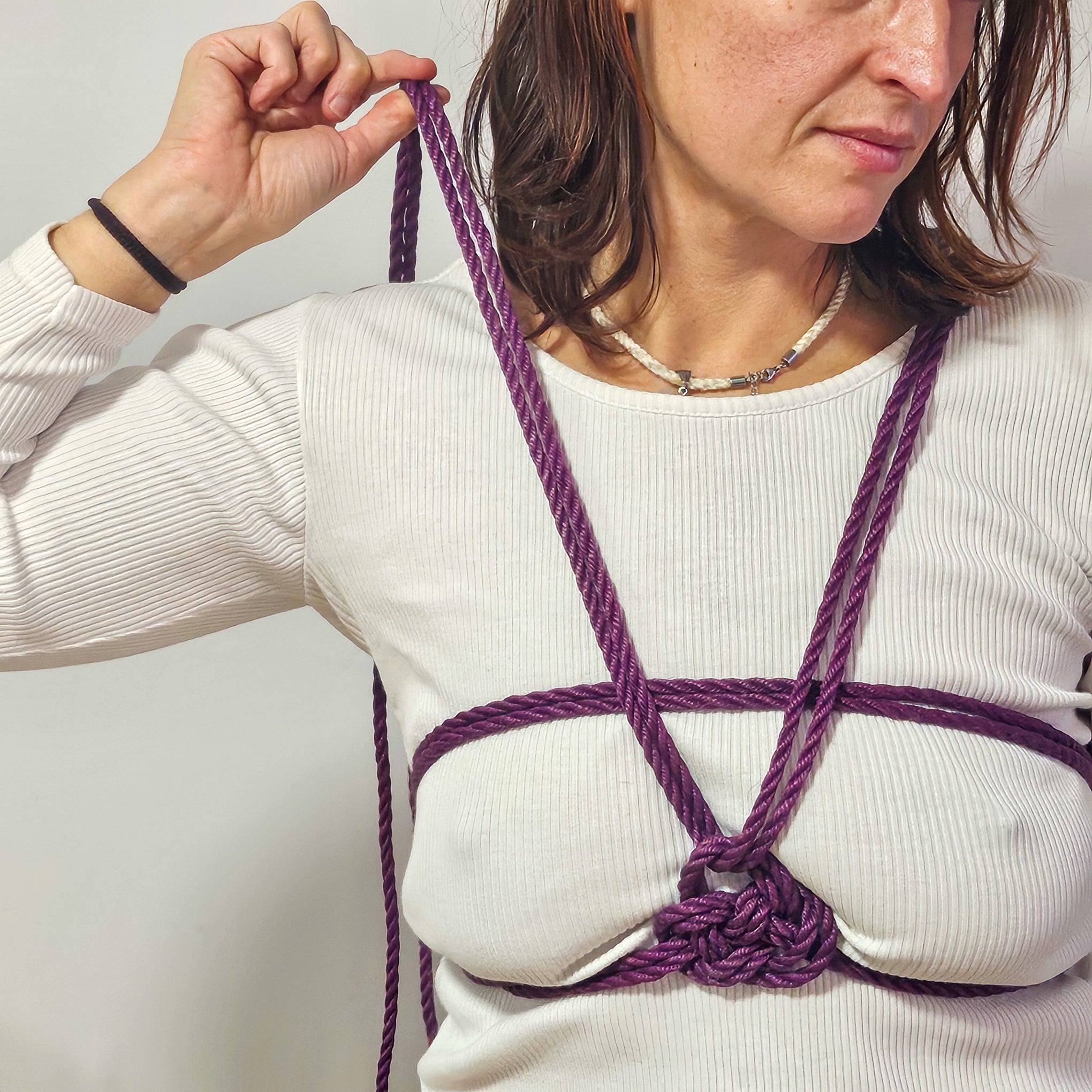
Fusion Bondage
Sometimes called Western Bondage, this term is often applied to bondage involving decorative knots and patterns that are not normally part of the Shibari canon.
-
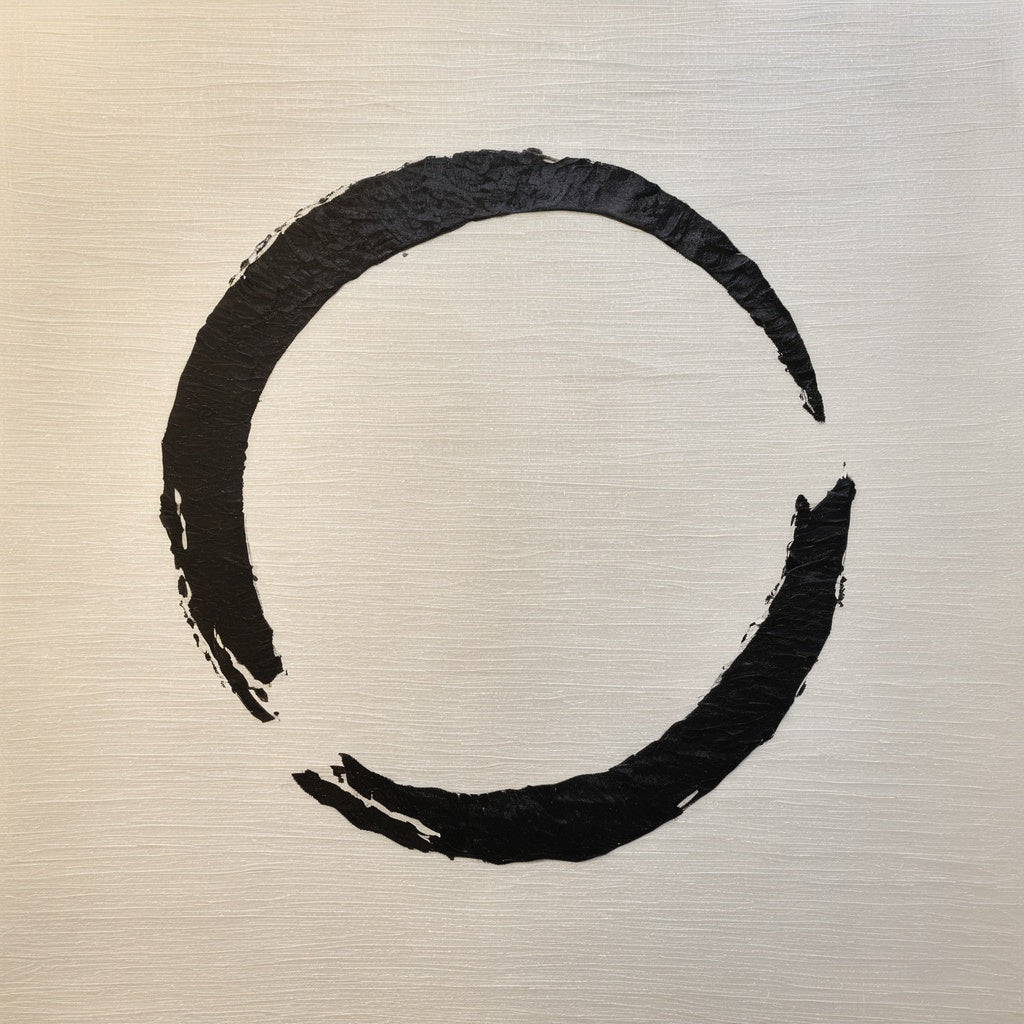
Gote Gasshō Shibari 後手合掌縛り
'hands behind the back in prayer tie' This refers to a Gote Shibari (see below) where the hands are behind the back in a prayer position.
-
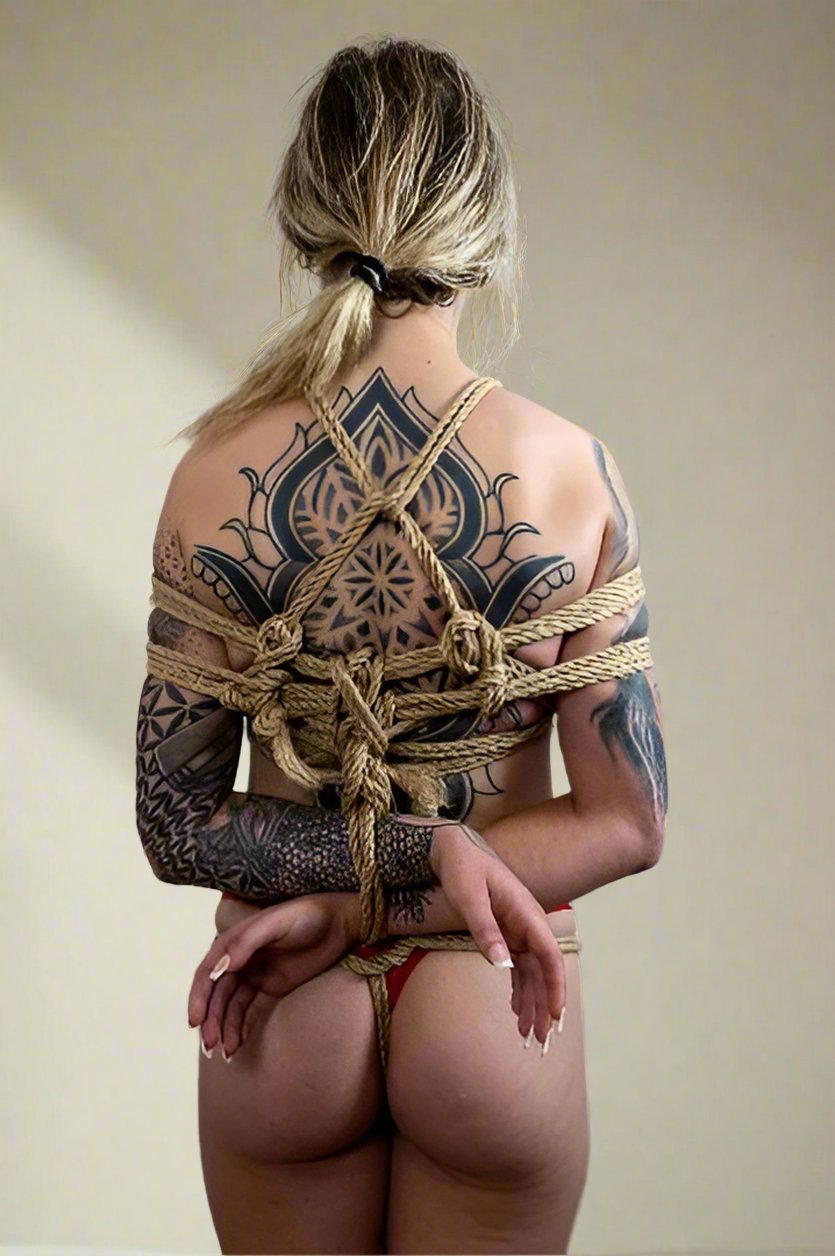
Gote Shibari 後手縛り
lit. rear hands, or hand's behind back binding. Used to refer to a wide variety of ties with hands behind the back and wraps around the arms and chest.
-

Gyaku-ebi Shibari
'Reverse ebi tie' This is the shibari version of the hog tie which brings the body into a backward arch by connecting the feet to a gote or chest harness.
Rope used: Tangerine Jute -
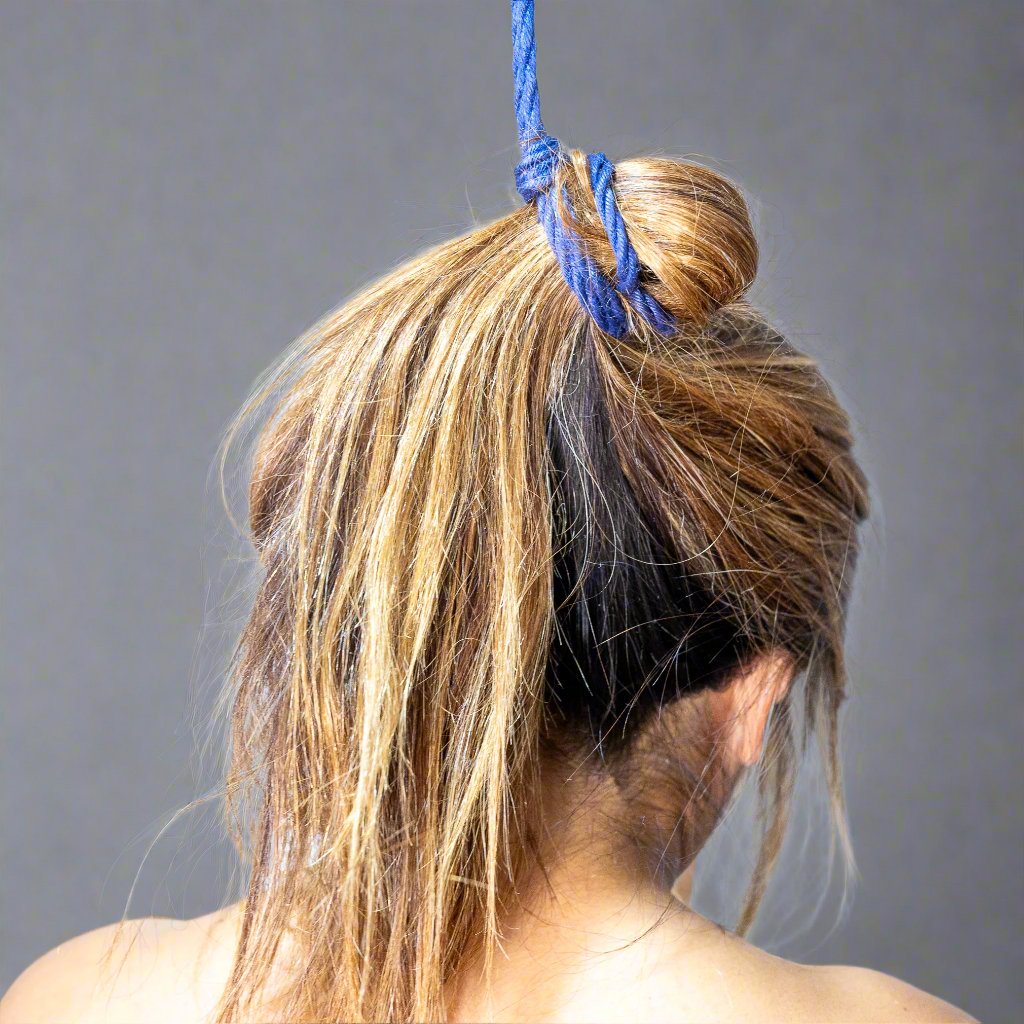
Hair Tie
-
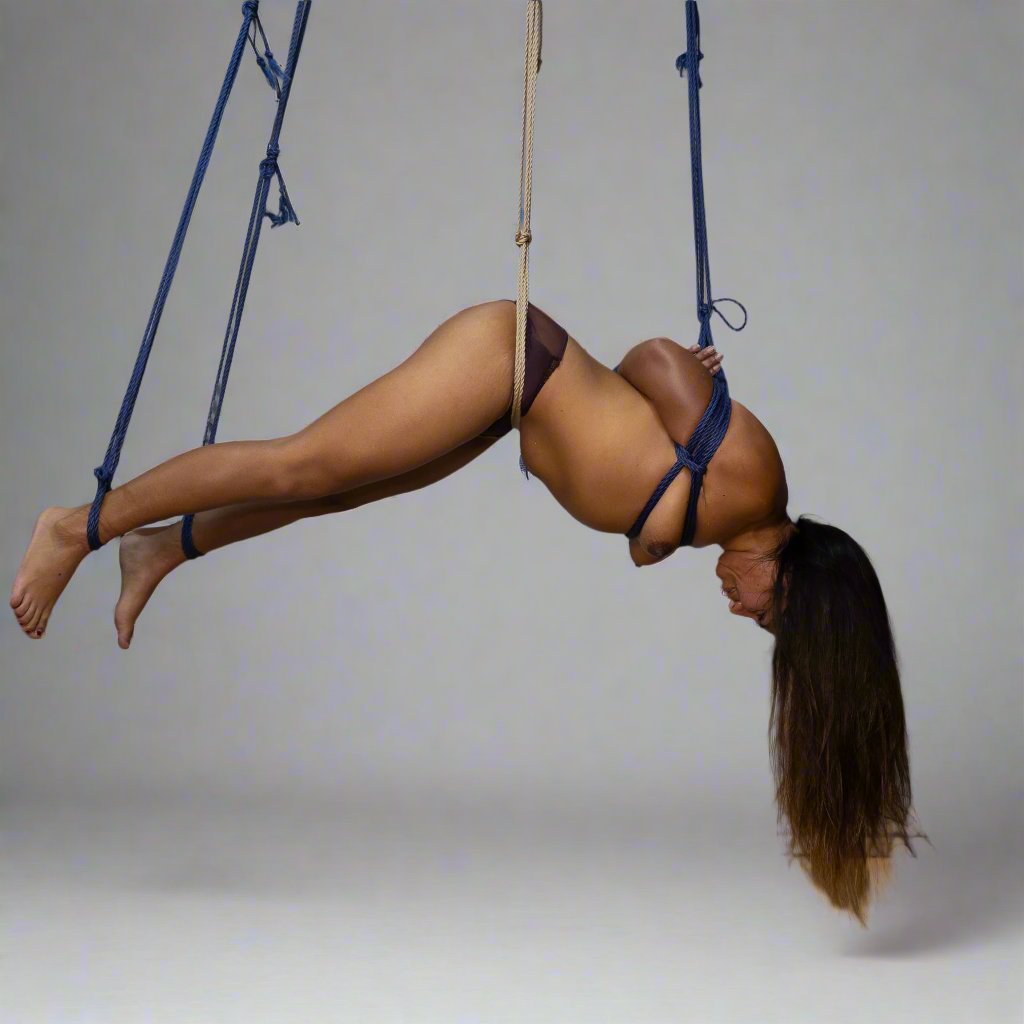
Hashigata zuri 橋型吊り
Bridge shaped suspension
-
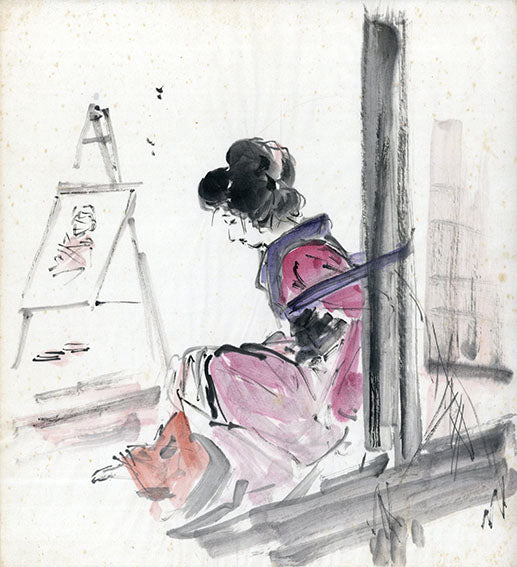
Hashira Shibari
Tied to a pillar
-

Hikui te shibari 低い手縛り
'low hands'
Rope Used: Purple Twilight 2ply Jute -
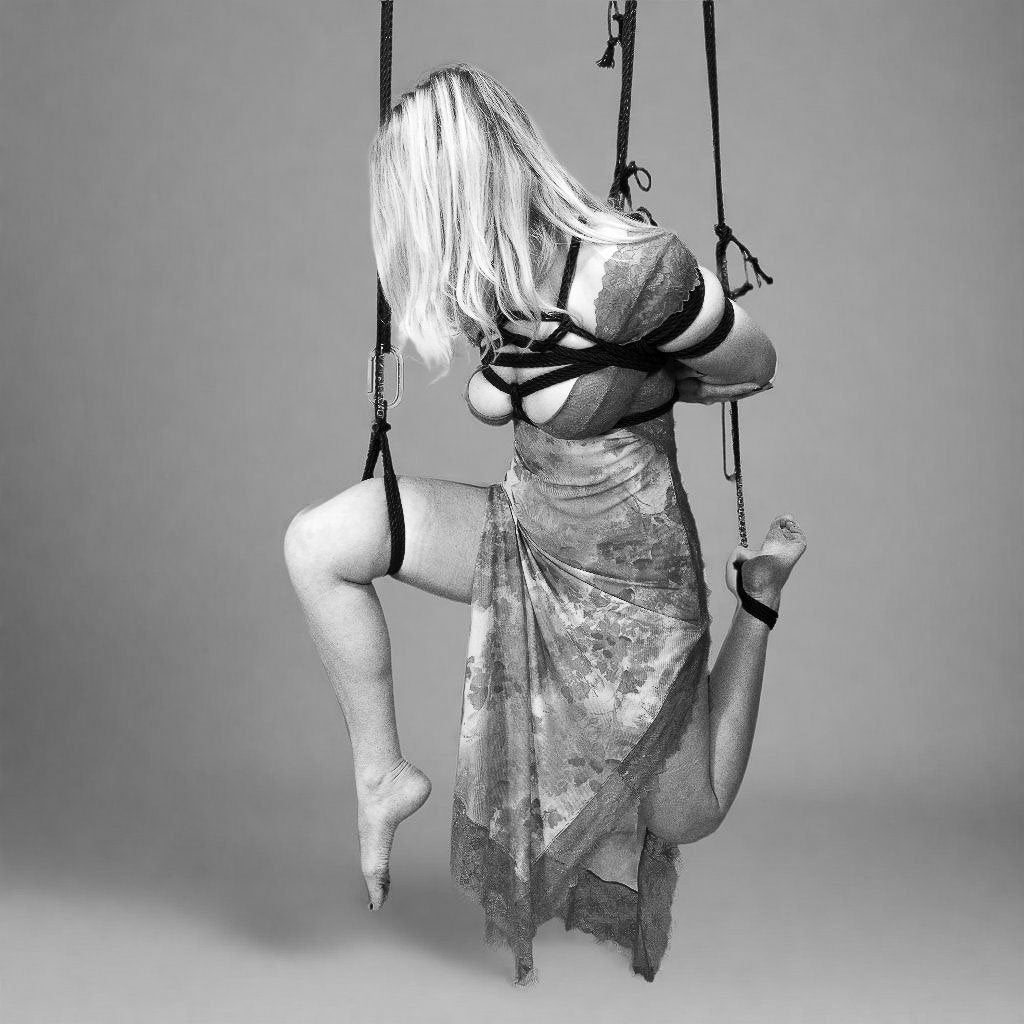
Hikyaku Zuri 飛脚
Known as a "Running man" in the west. This is a suspension position in which a Gote Shibari is used with one leg tied above the knee in front, and the other tied from the ankle behind.
-
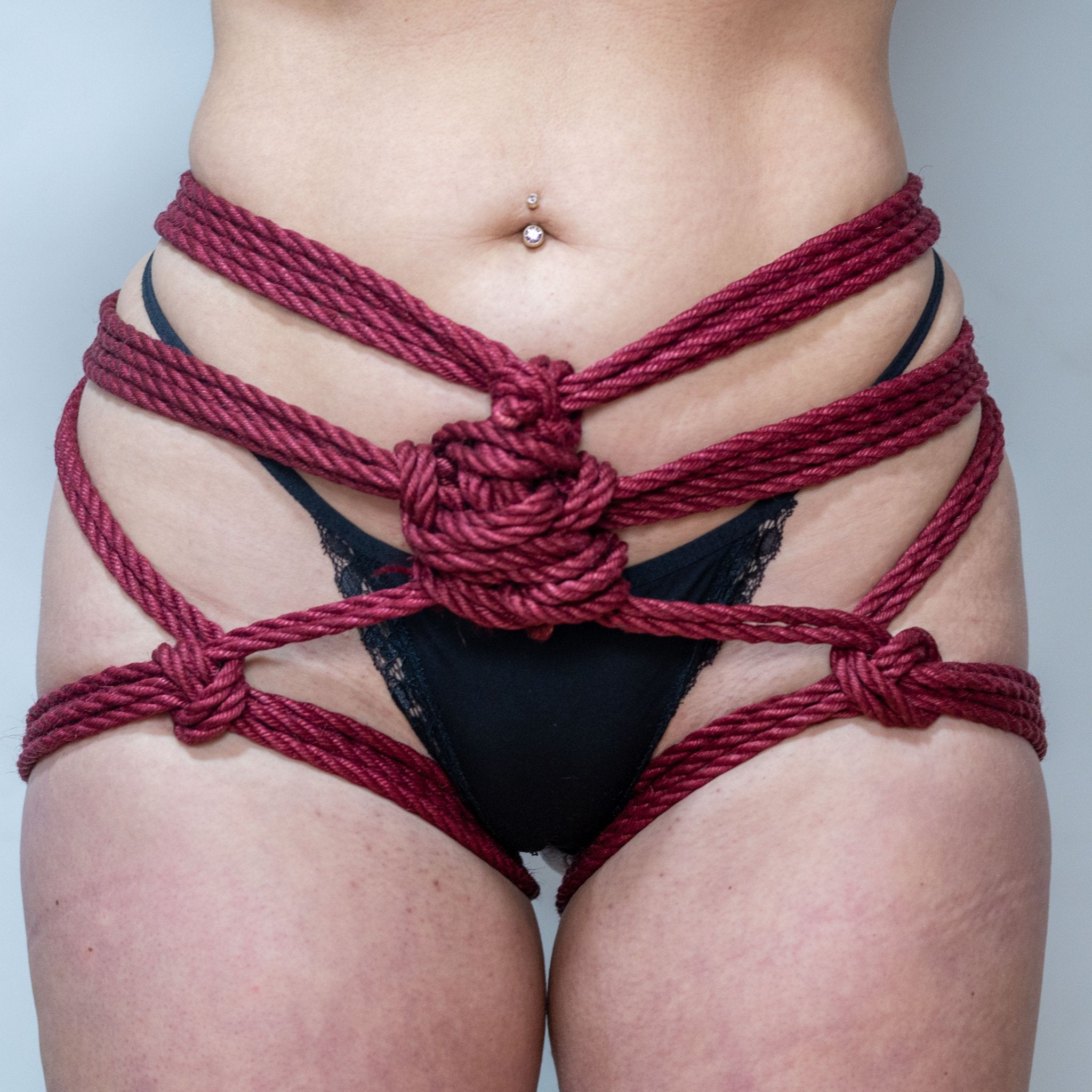
Hip Harness
A category of ties that involve placing rope around the hip often used to support suspension.
-

Hishi Shibari 菱縛り
Translation: “Diamond tie.” Any tie or rope pattern that creates diamond-shaped openings within the structure of the rope. These patterns may be used for decorative effect, to frame and accentuate the body, or to distribute pressure and support across the body. Hishi patterns can appear in both simple harnesses and more complex structural ties.
Rope Used: Phoenix 2ply Jute -

Hog Tie
A stress position tie in which the person is on there back and the legs and back are arched . This is a Western style tie.
Rope Used: Lava Jute Hybrid -
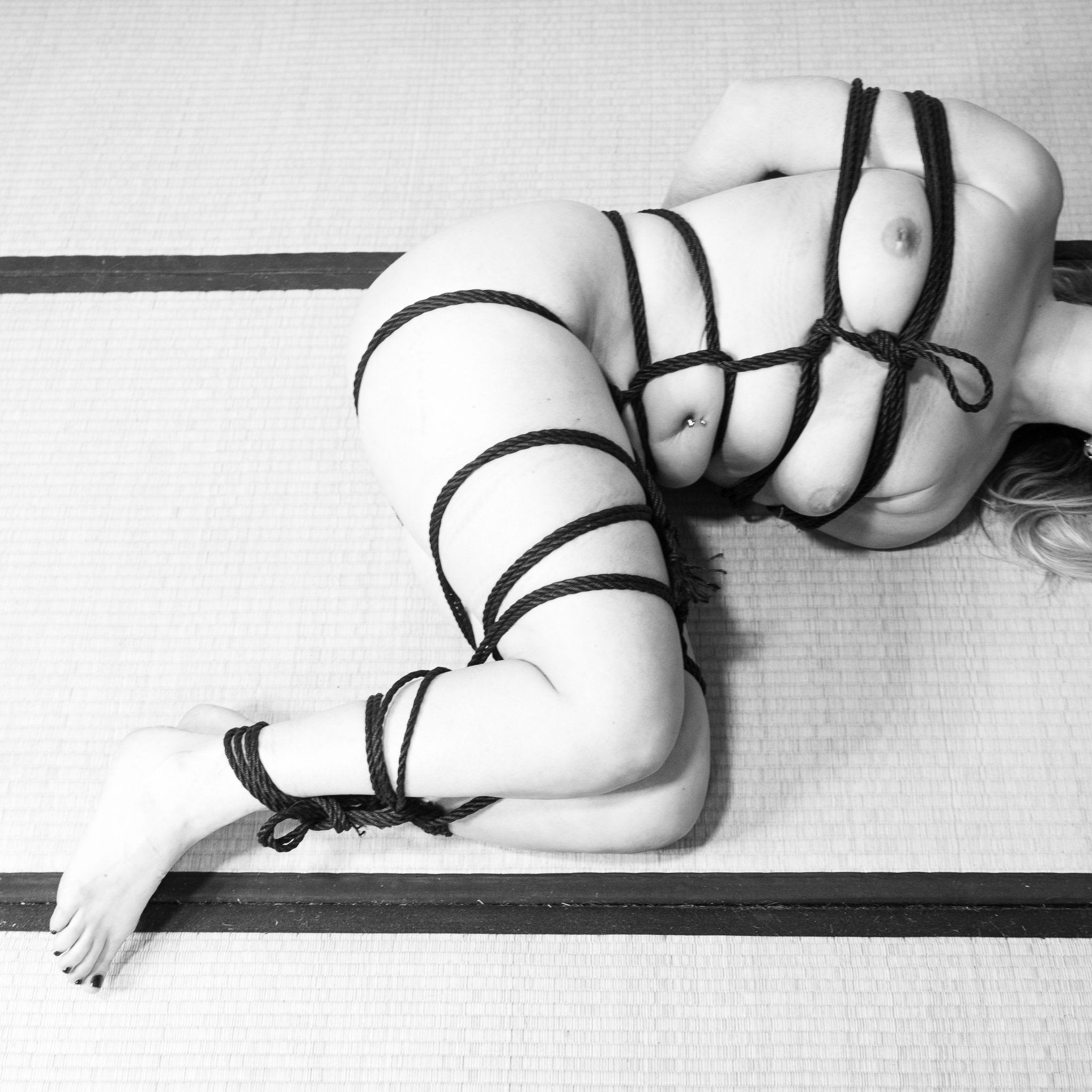
Imomushi Shibari 芋虫縛り
'Caterpillar tie' Ties in which the bound person resembles a caterpillar.
-

Iwato nawa shibari
'rock cave rope binding'. Used to refer to any tie in which the legs are tied apart to expose the genitals.
-
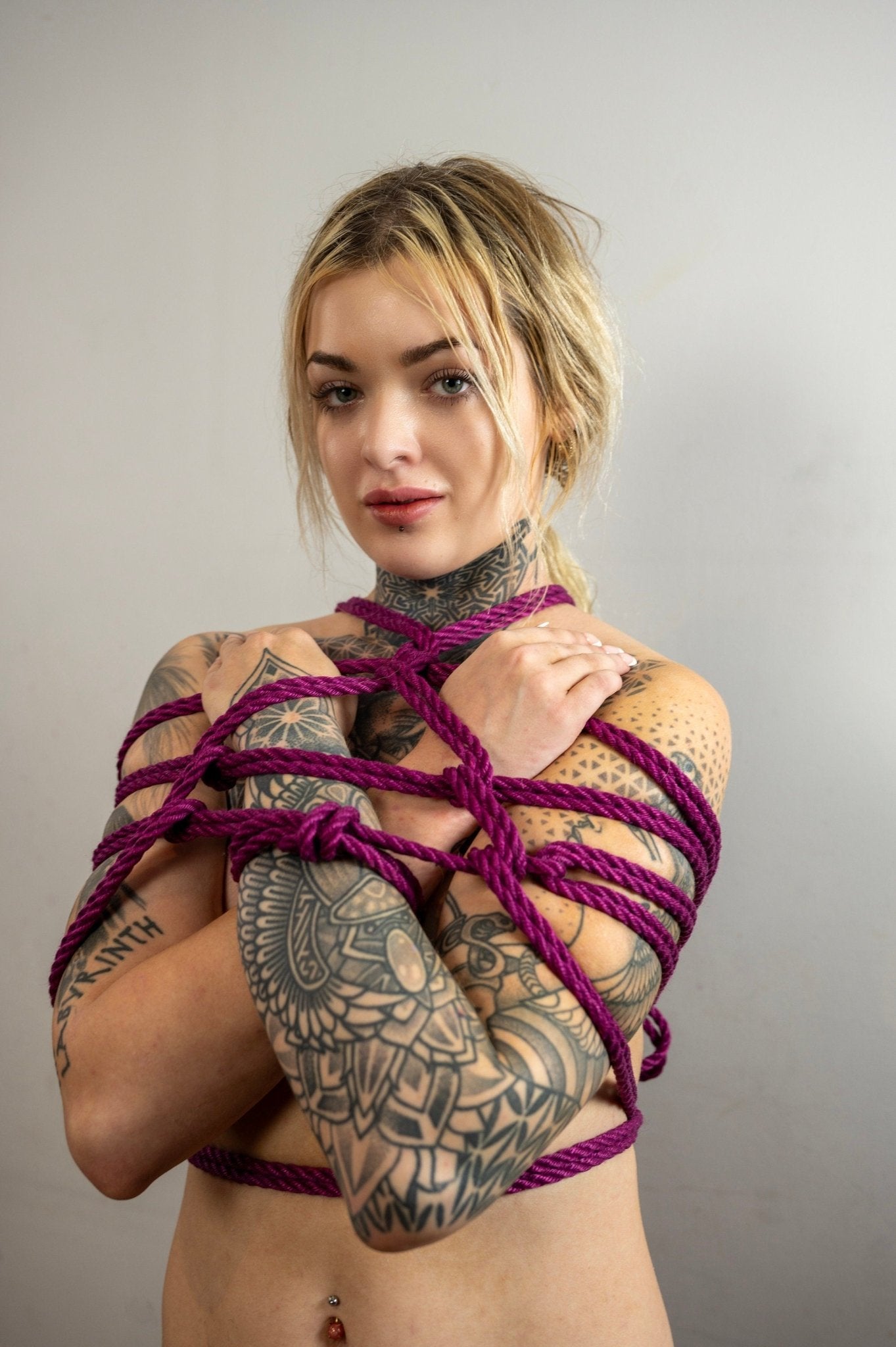
Jiai Shibari 自愛縛
'self love binding' used for ties in which the persons hands are tied to there chests as though they are hugging themself.


-
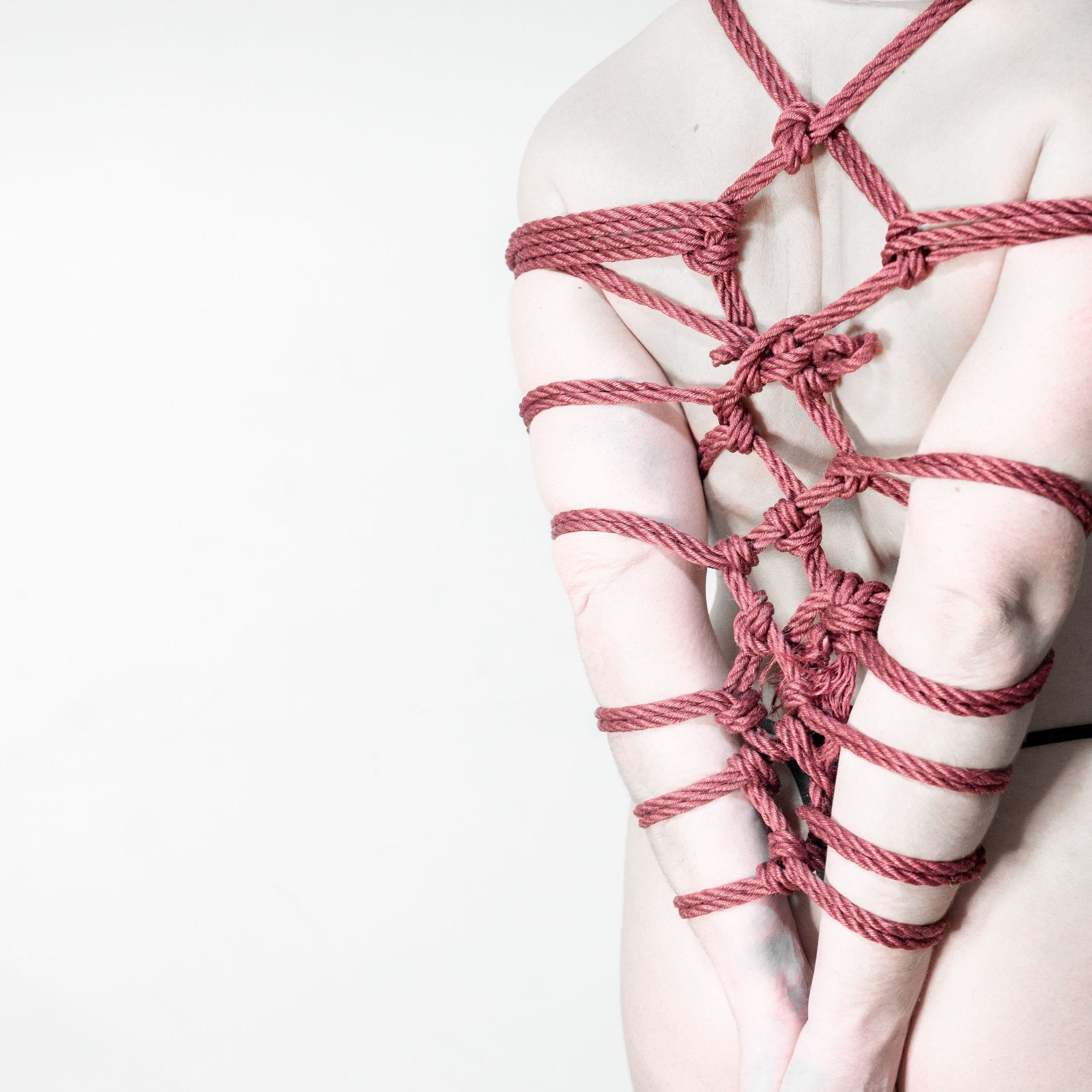
Kagerou shibari 陽炎縛り
Mayfly tie- a strappardo with a hishi design (diamond shapes) between the arms.
-
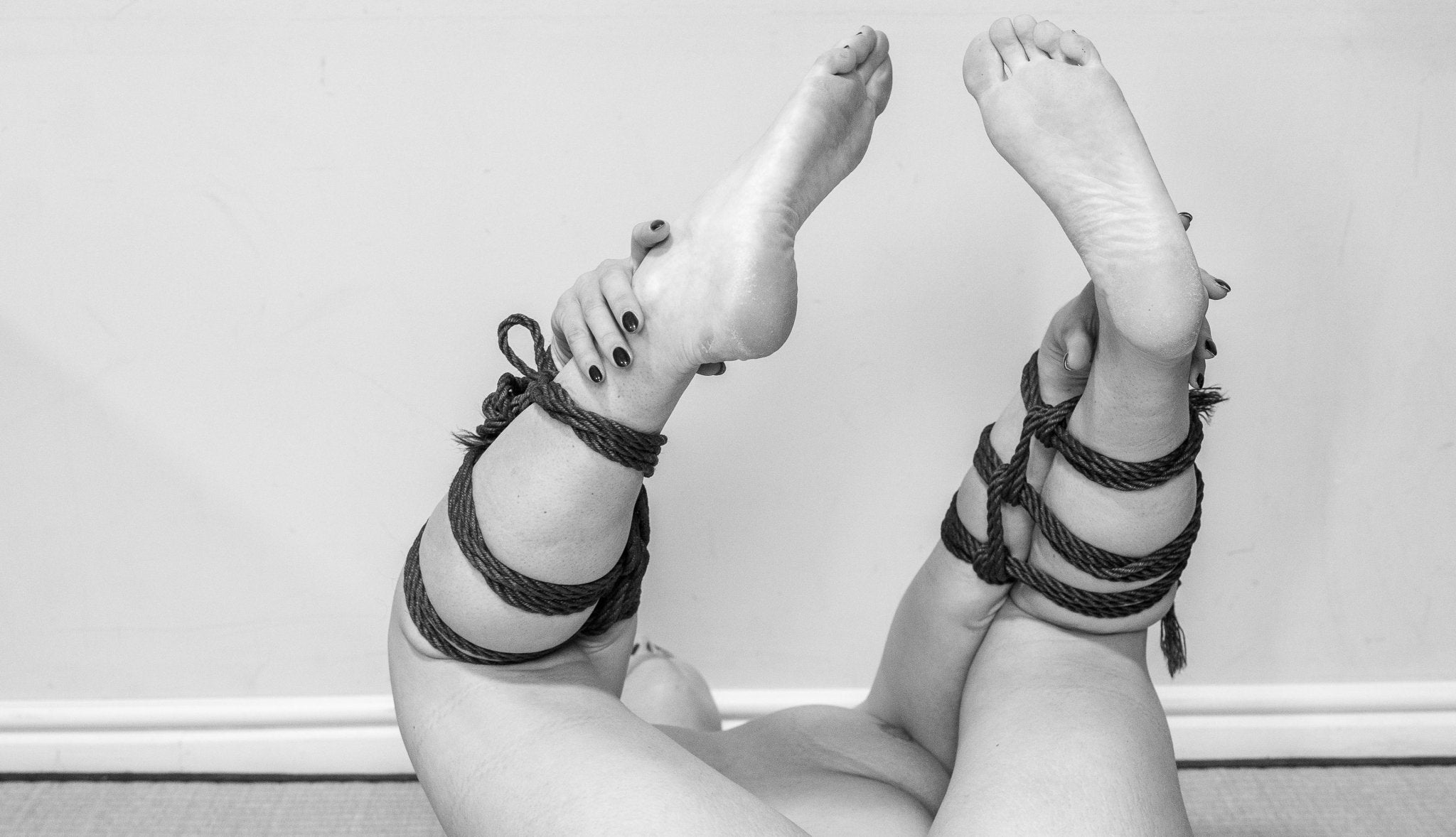
Kaikyaku kani shibari 開脚蟹縛り
Spread-leg crab tie' describes a position in which the legs and forearms are tied to each other creating a spread leg position.
-

Kaikyaku shibari開脚縛り
'spread leg tie'. While there are many varieties of spread leg ties this name can be applied to them all as a general category.
Rope Used: Violet 2ply Jute -
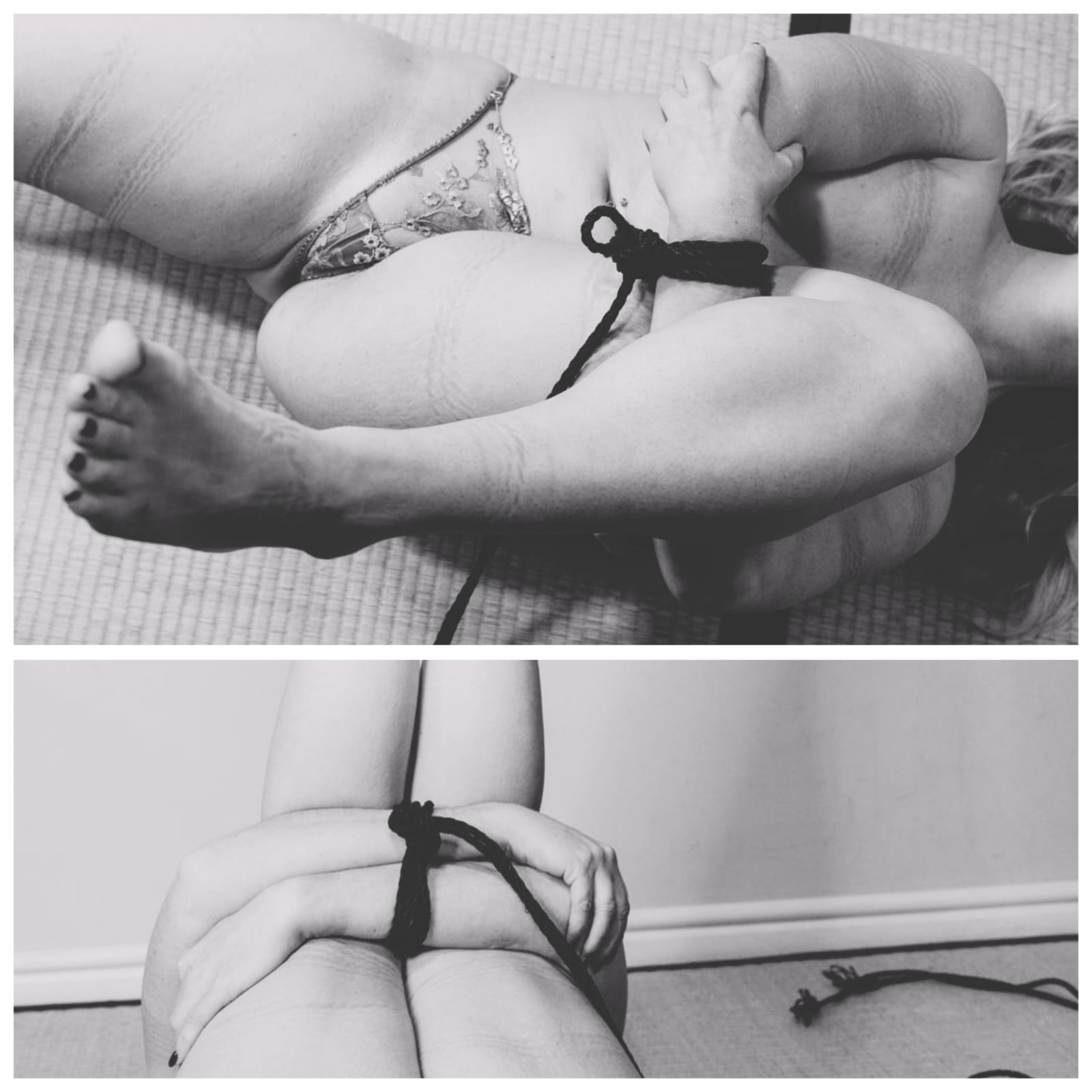
Kaka Shibari 抱える縛り
Tutorial'holding/hugging tie' This tie can involve either both arms holding one or two legs and then tied with a single column to secure.
-
Kami shibari 髪縛り
Hair tie
Rope used: Navy Blue Jute
-
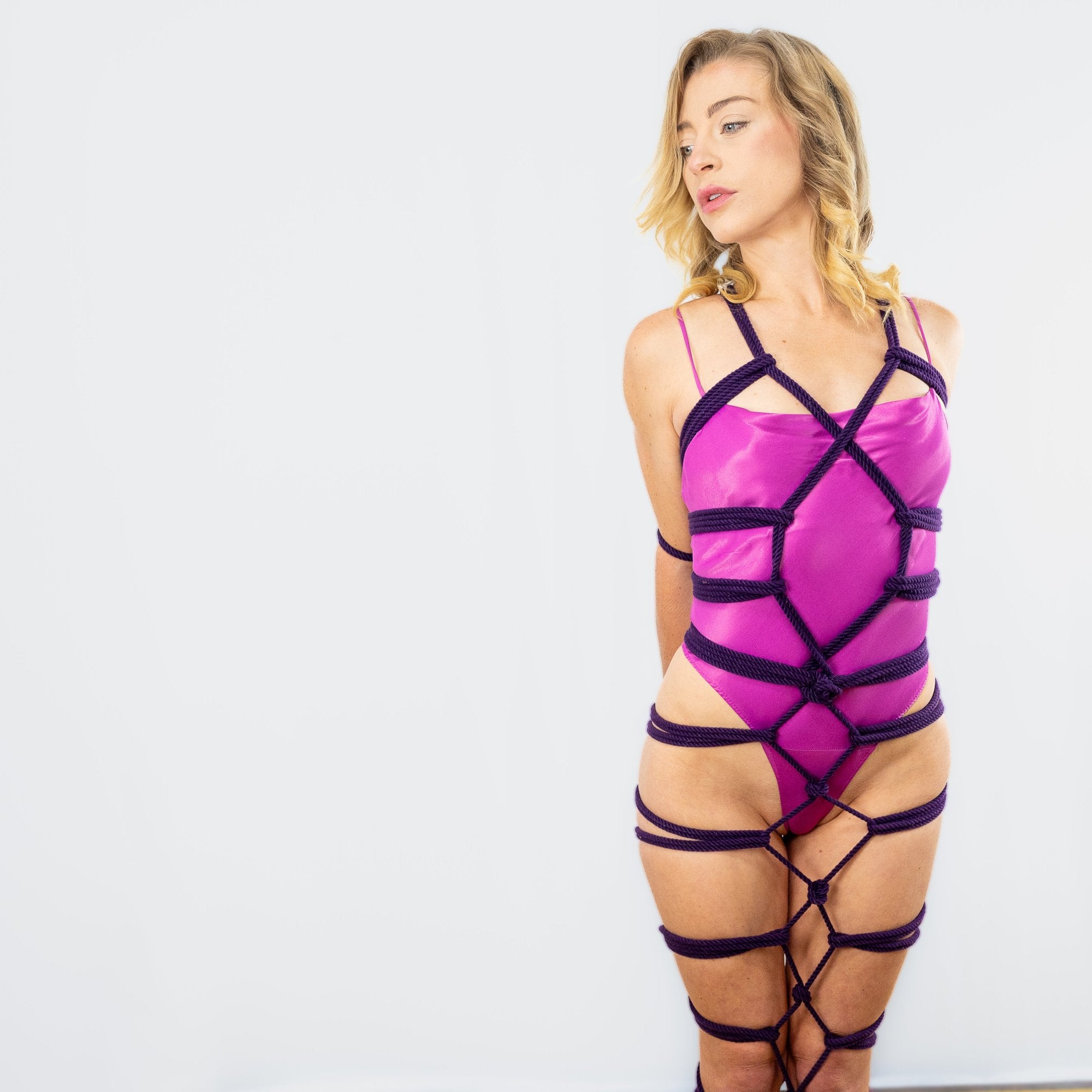
Karada Shibari 体縛り
'body binding' this can refer to any rope pattern that ties the body but is most often applied to non-gote ties that are tied to the torso and extend beyond the chest.
-
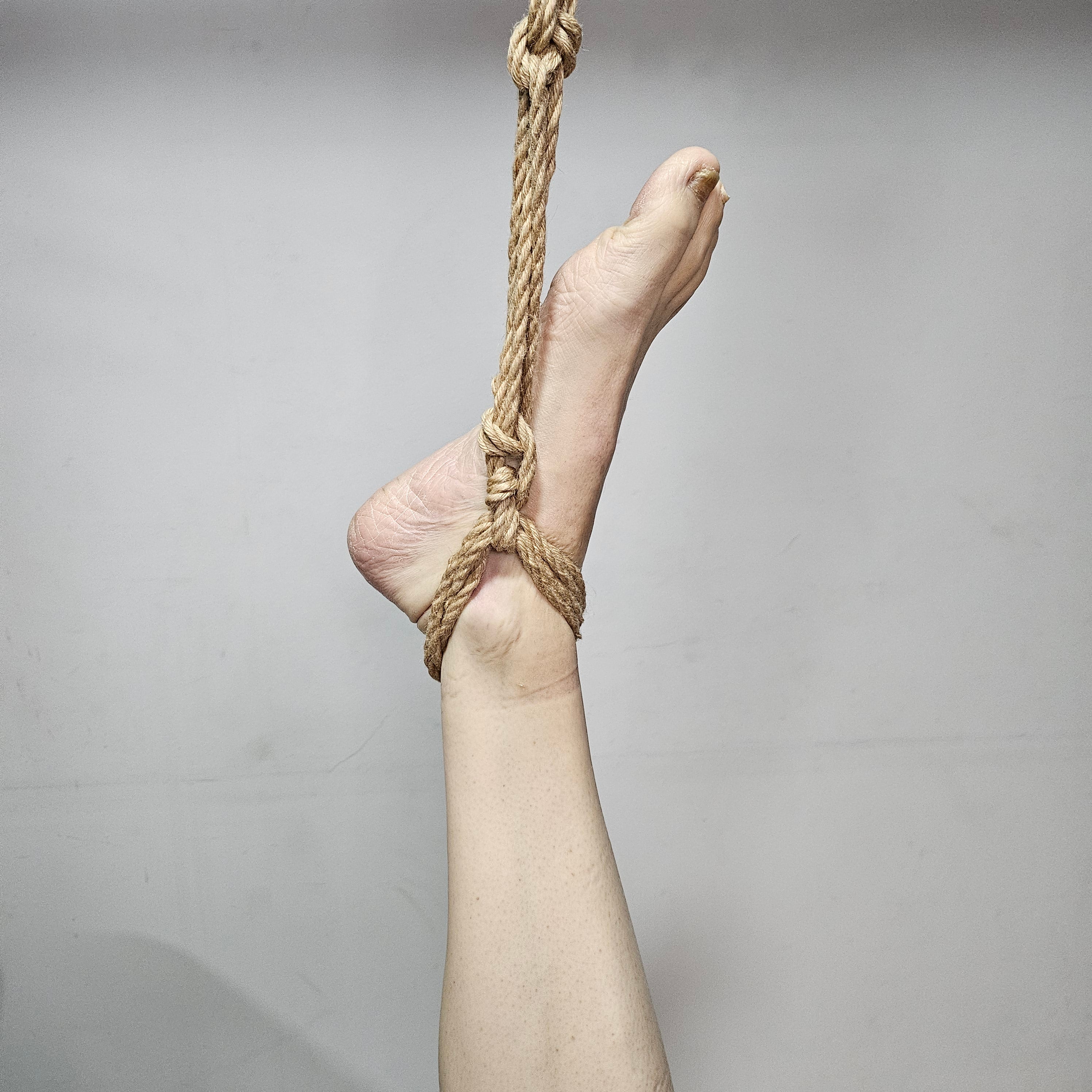
Kata-ashi sakasa zuri 片足逆さ吊り -
Tie in which someone is suspended from a single ankle.
-
-
Kemono Shibari 獣縛り
'beast tie' This tie is named after the appearance of animals that have been killed and are brought back tied to a pole.
-
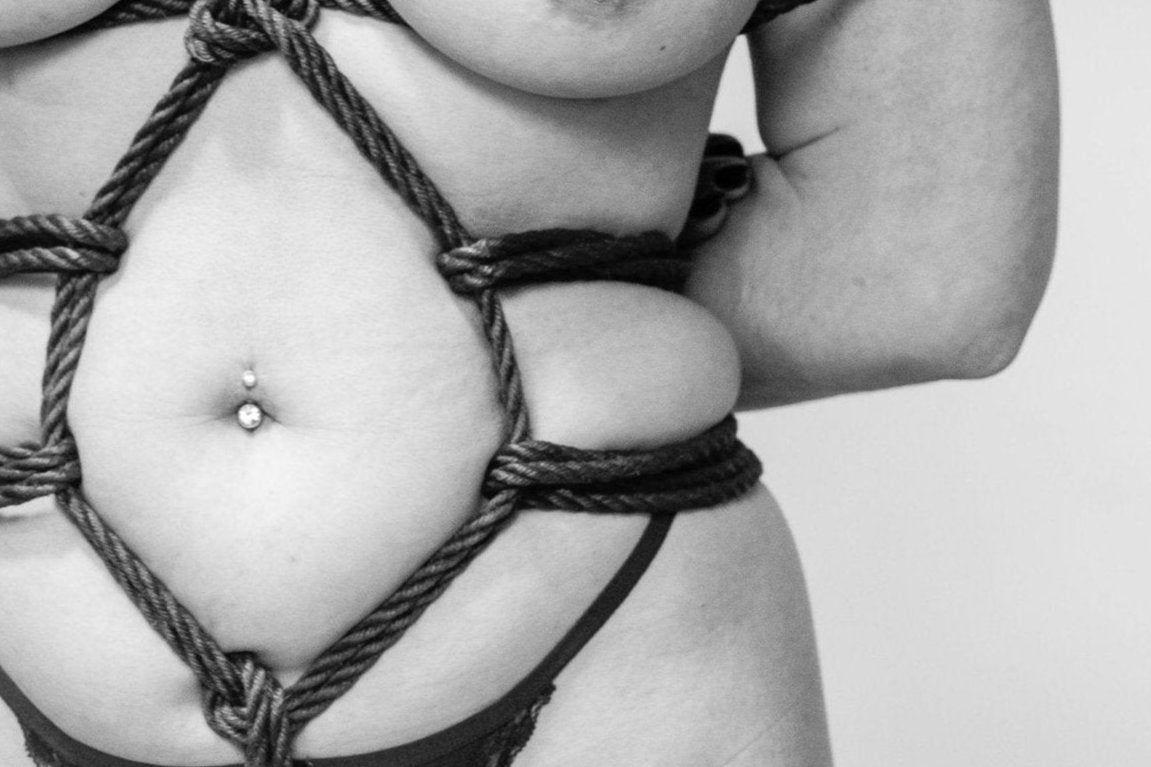
Kikkou Shibari 亀甲縛り
'tortoise shell tie' any tie in which the ropes form hexagon shapes.
-
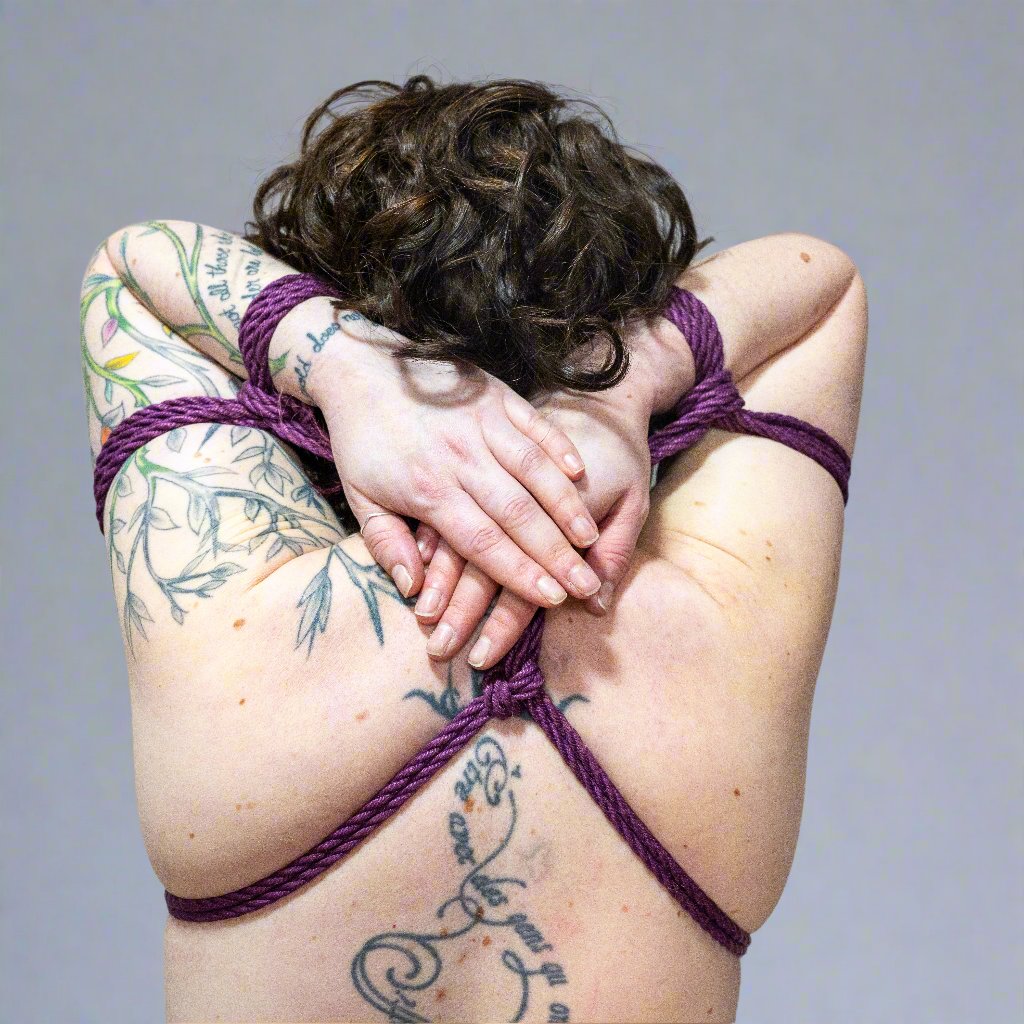
Kouto ushiro te shibari 後頭後手縛
'hands tied behind the head' see Bunny ears.
-

Koutoubu ryo-tekubi shibari 後頭部両手首縛り
'Tie with both wrists at the back of the head' see Bunny ears.
Rope Used: Purple Berry Bliss -
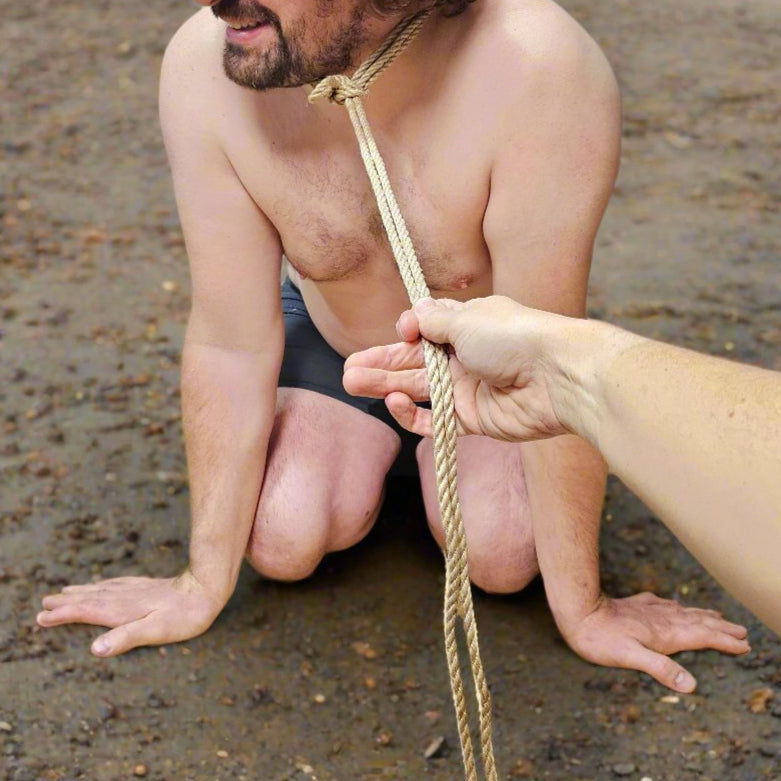
Kubi Shibari 首縛り
'neck binding' any tie which involves rope around the neck. Only to be attempted by advanced riggers.
-
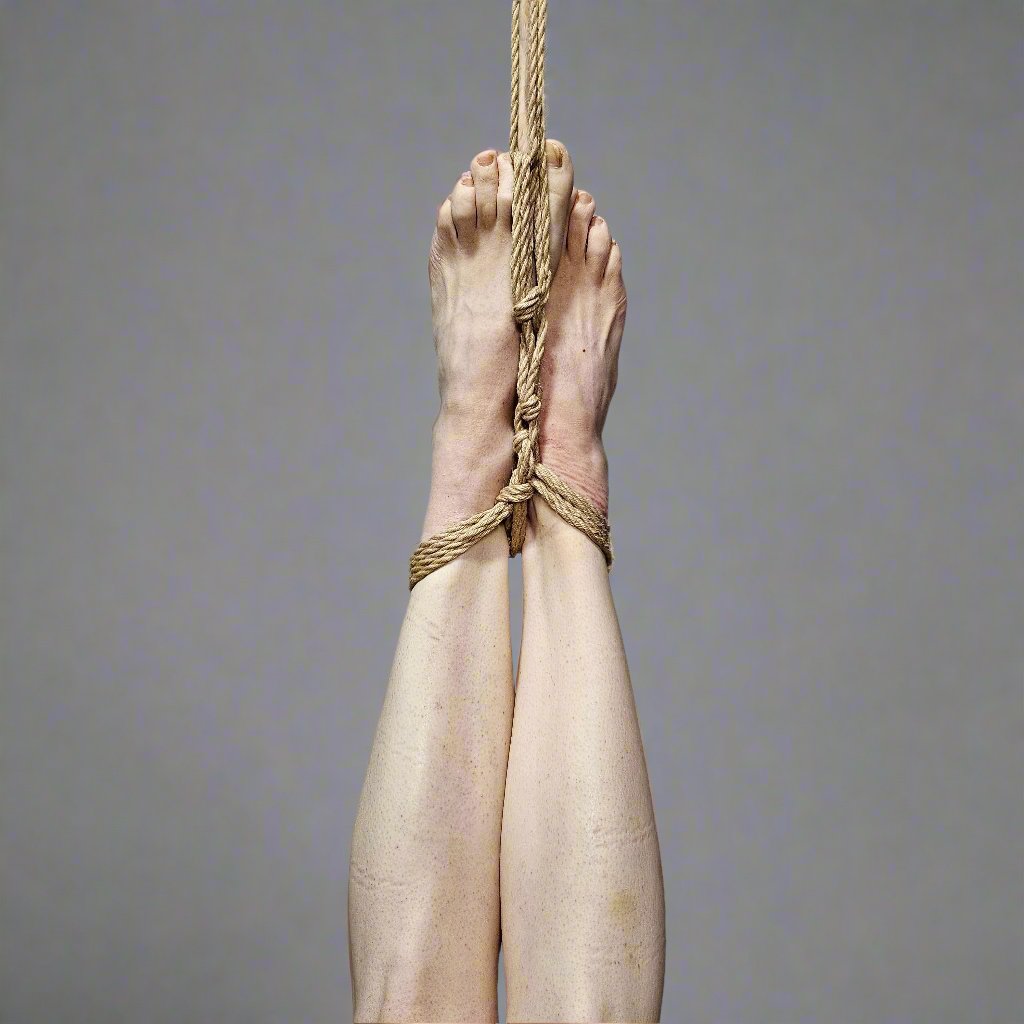
Leg Ties
A general catagory for any ties to the legs
-
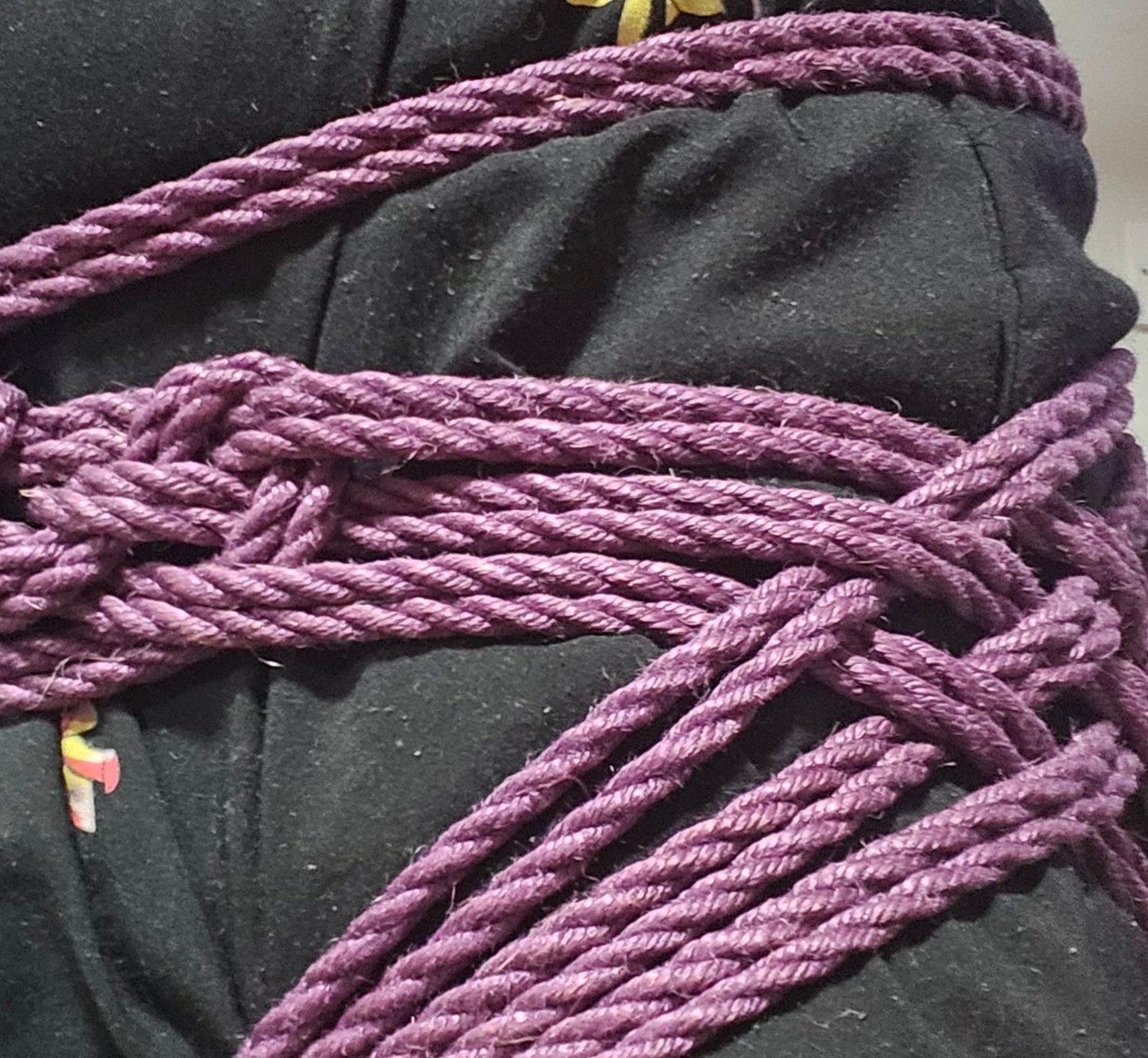
Leto Hip Harness
-
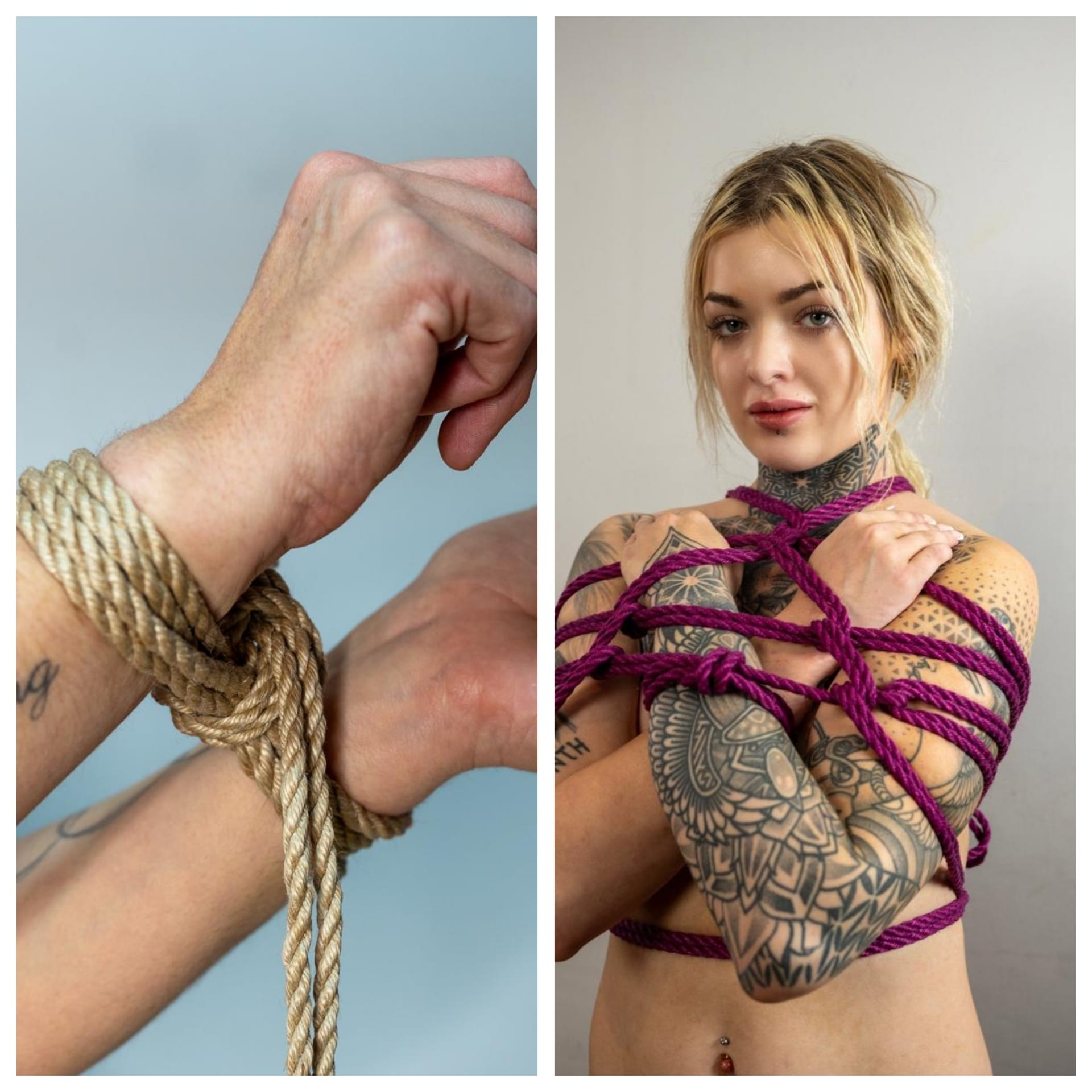
Mae Te Shibari 前手縛り
'Front hand binding' any tie in which the hands are tied in front of the body.
-
Matanawa 股縄
'Crotch Rope' a broard catagory of ties involving rope going over or applying presure to the crotch.
-
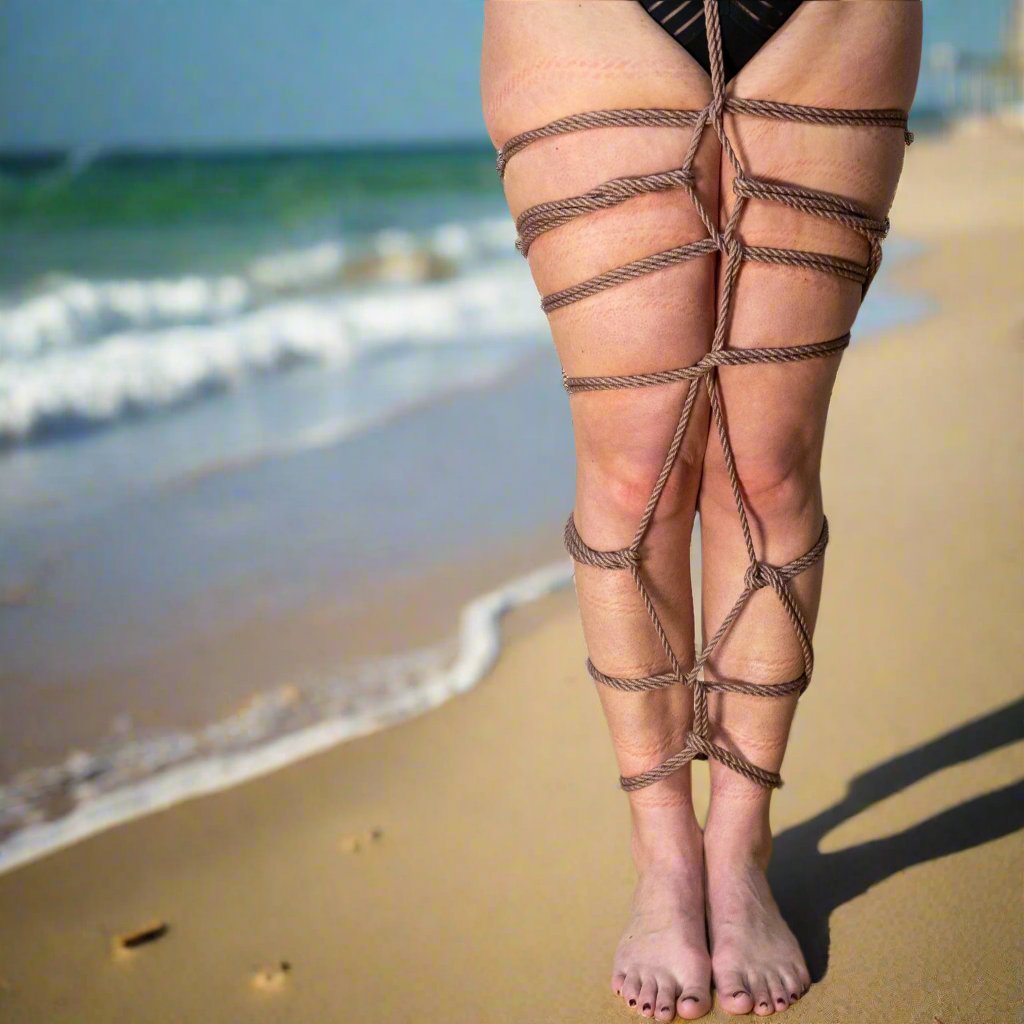
Mermaid tie
ties in which the legs are tied together in a straight line
-
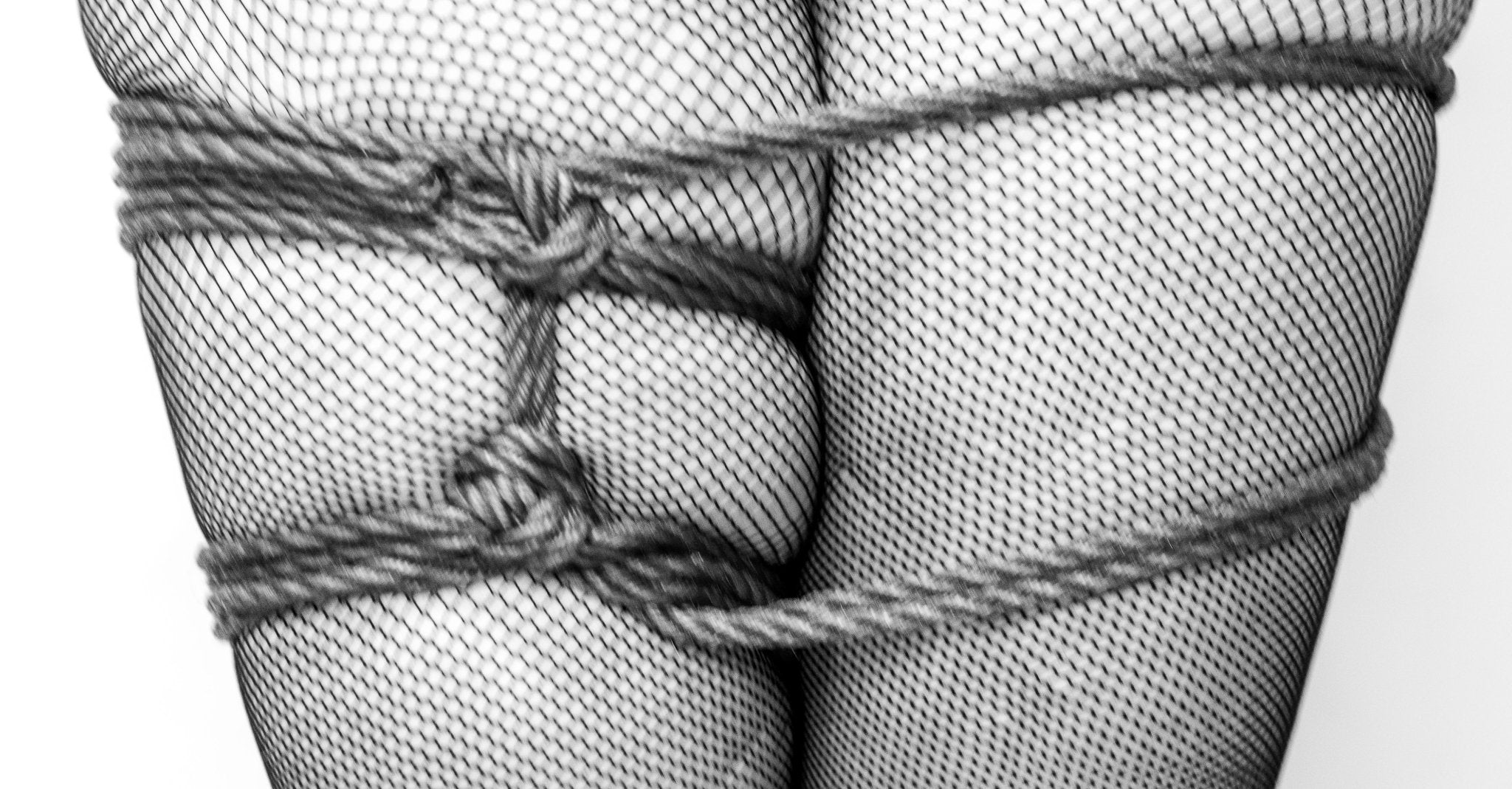
Momo shibari 腿縛り
'tied thighs'
-
Munenawa 胸縄
'chest rope' see Chest harness.
-
Nawa zuri 縄吊り
Generic word for rope suspension
-

Newaza 緋縄座
Ties on someone in a seated or laying position.
Rope Used: Bamboo Dreams -
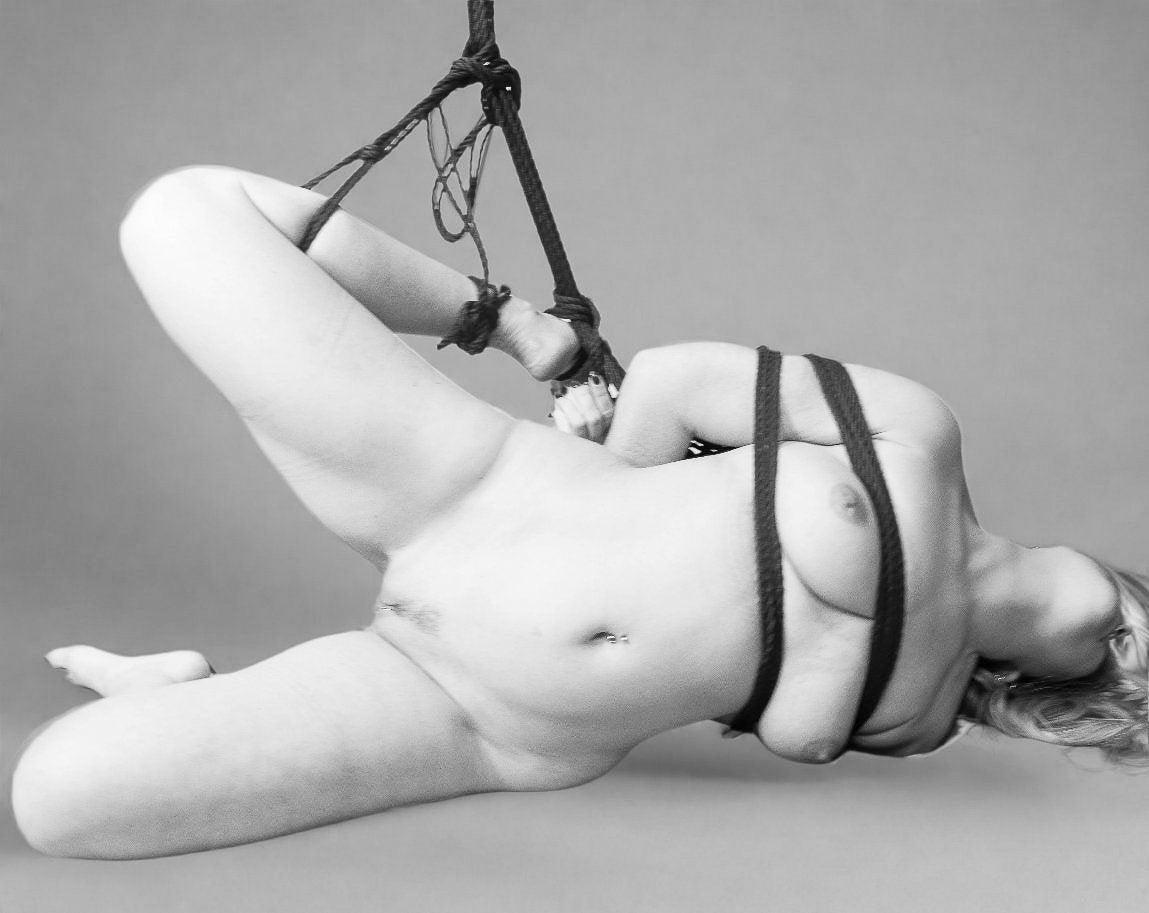
Partial Suspension
Where one or more limbs are attached to a suspension point but the tied person remains in contact with the ground.
-
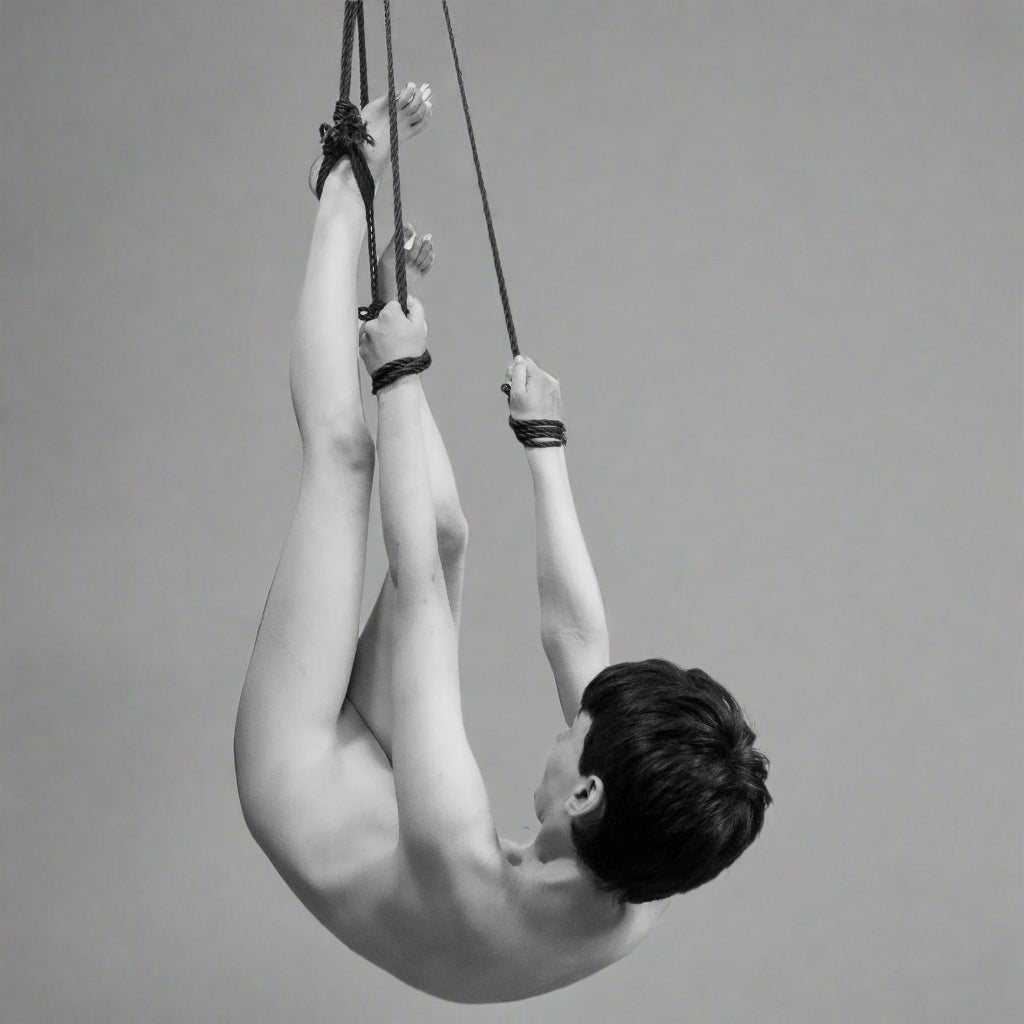
Racoon Tie / Tanuki zuri 狸吊り
Each arm and leg tied independently to suspension point to allow for a suspension from four limbs.
-
Ryōashi Gattai Ichimonji Shibari 両足合体一文字縛り
'both legs bound together straight'. See mermaid ties.
-
Ryoashi sakasa zuri 両足逆さ吊り / Ryouashi zuri 両足吊り
Suspension using both legs/ankles only.
-
Ryōkyaku Gote Kakae Shibari 両脚後手抱え縛り
'hands behind holding both legs' A tie originally created by Akechi Denki which was loaded from a chest harness now more normally referred to as Daruma Shibari or moon tie.
-
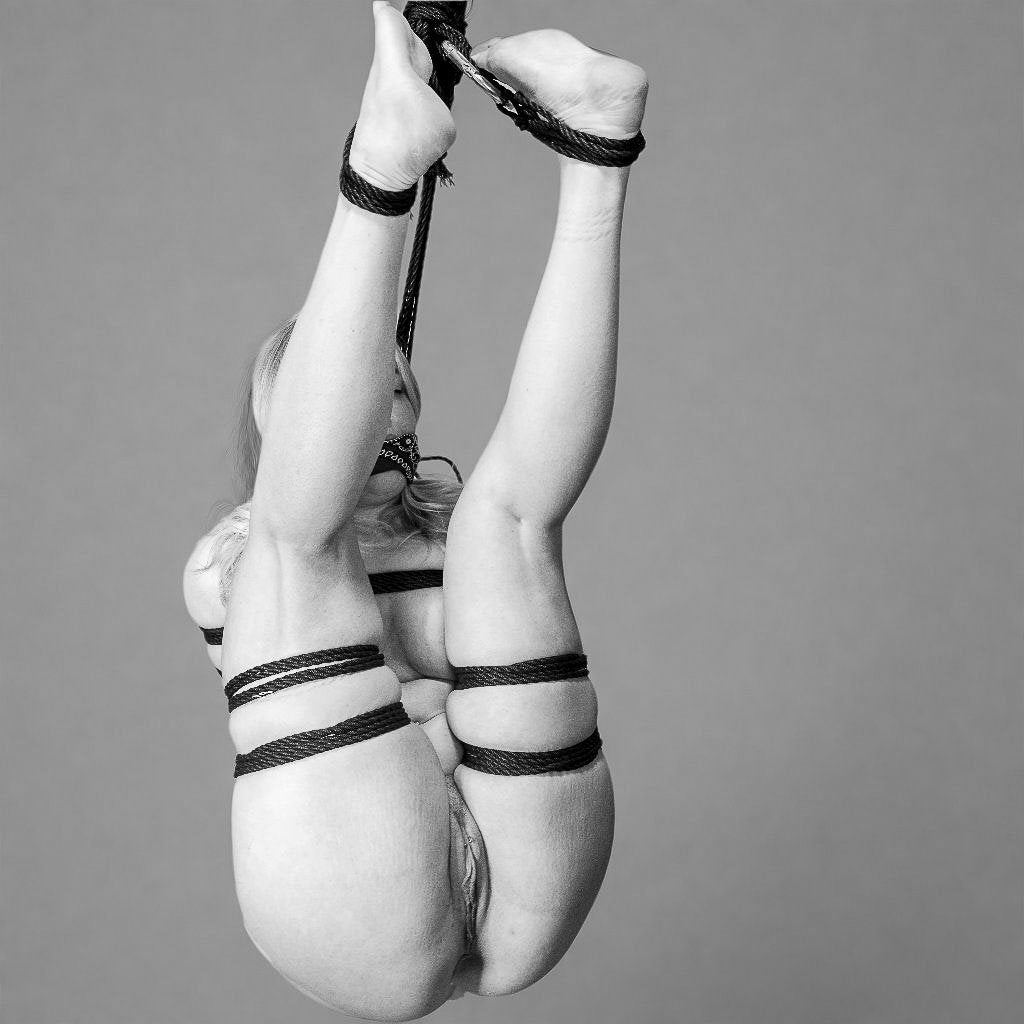
Ryōkyaku Gote Shibari 両脚後手縛り
'both legs bound with a gote' I include this tie to provide an example of the flexibility of naming when it comes to ties. The rope pattern and position in this tie is very different from Ryōkyaku Gote Kakae Shibari 両脚後手抱え縛り although elements may have visual simularties. In this tie a Gote Shibari has been used (a chest tie that goes over the arms) where as in the origional tie the Gote Kakae is used to mean hold both legs.
-
Ryotekubi Shibari 両手首縛り
'Wrists tied together'
-
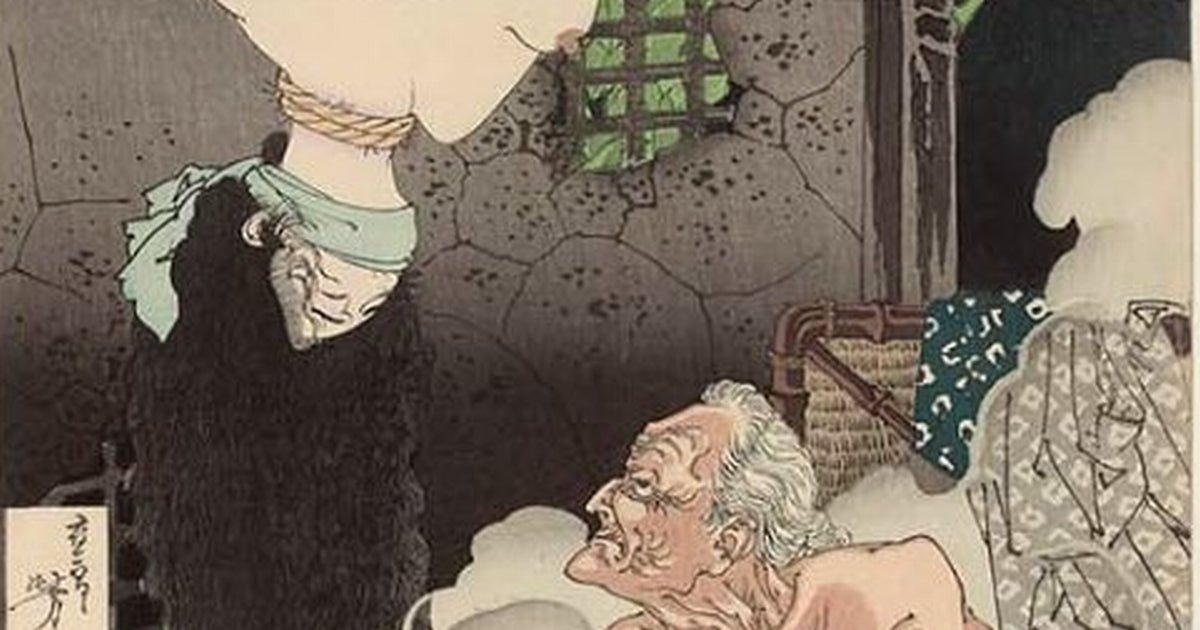
Sakasad zuri 逆さ吊り
Inverted suspension
-
Sakuranbo shibari 桜ん坊縛り
'tying the cherry' euphemism for crotch ties / matanawa
-
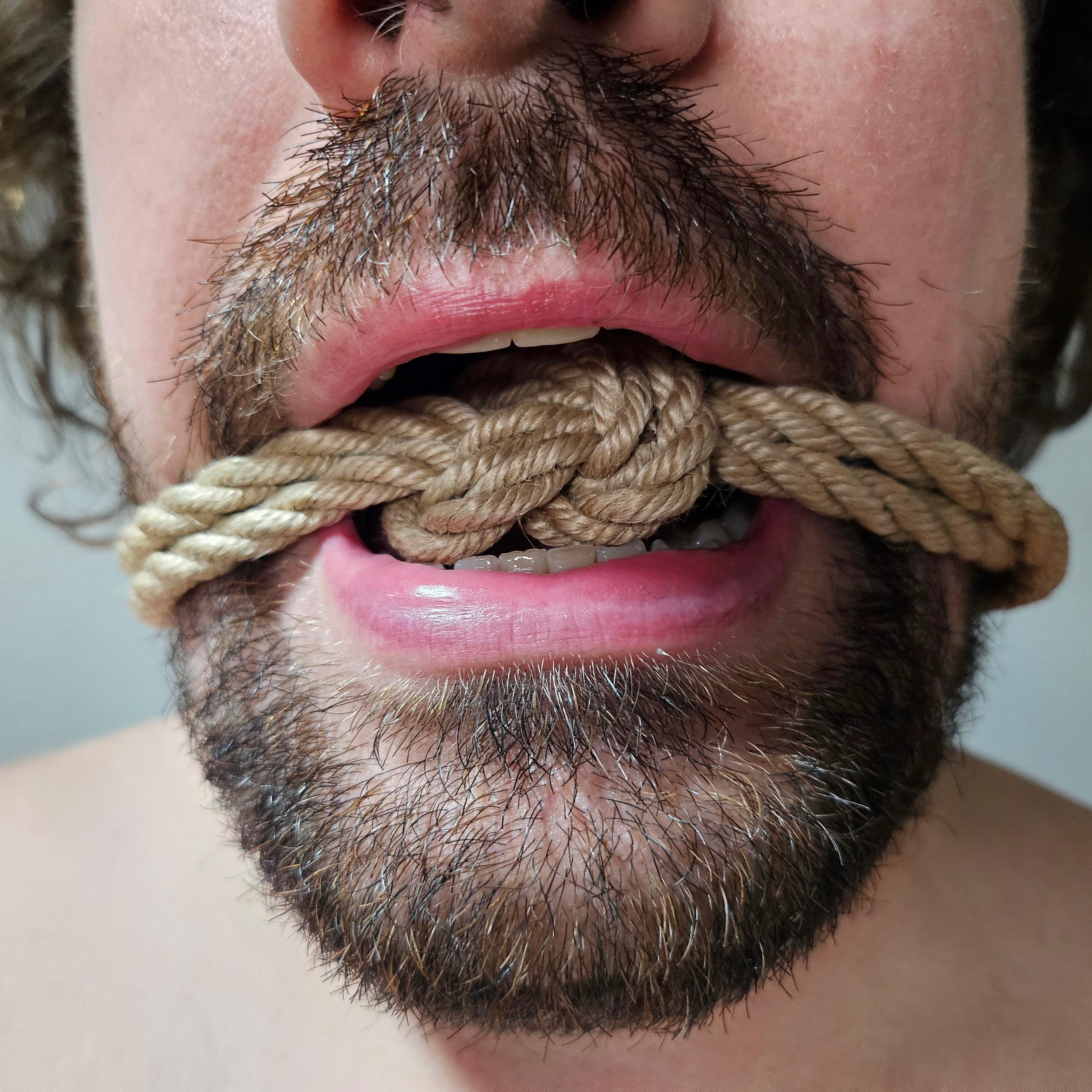
Sarugutsuwa 猿轡
'monkey gag' originally a reference to a gag specifically to restrict speech now used to refer to any gag.
-
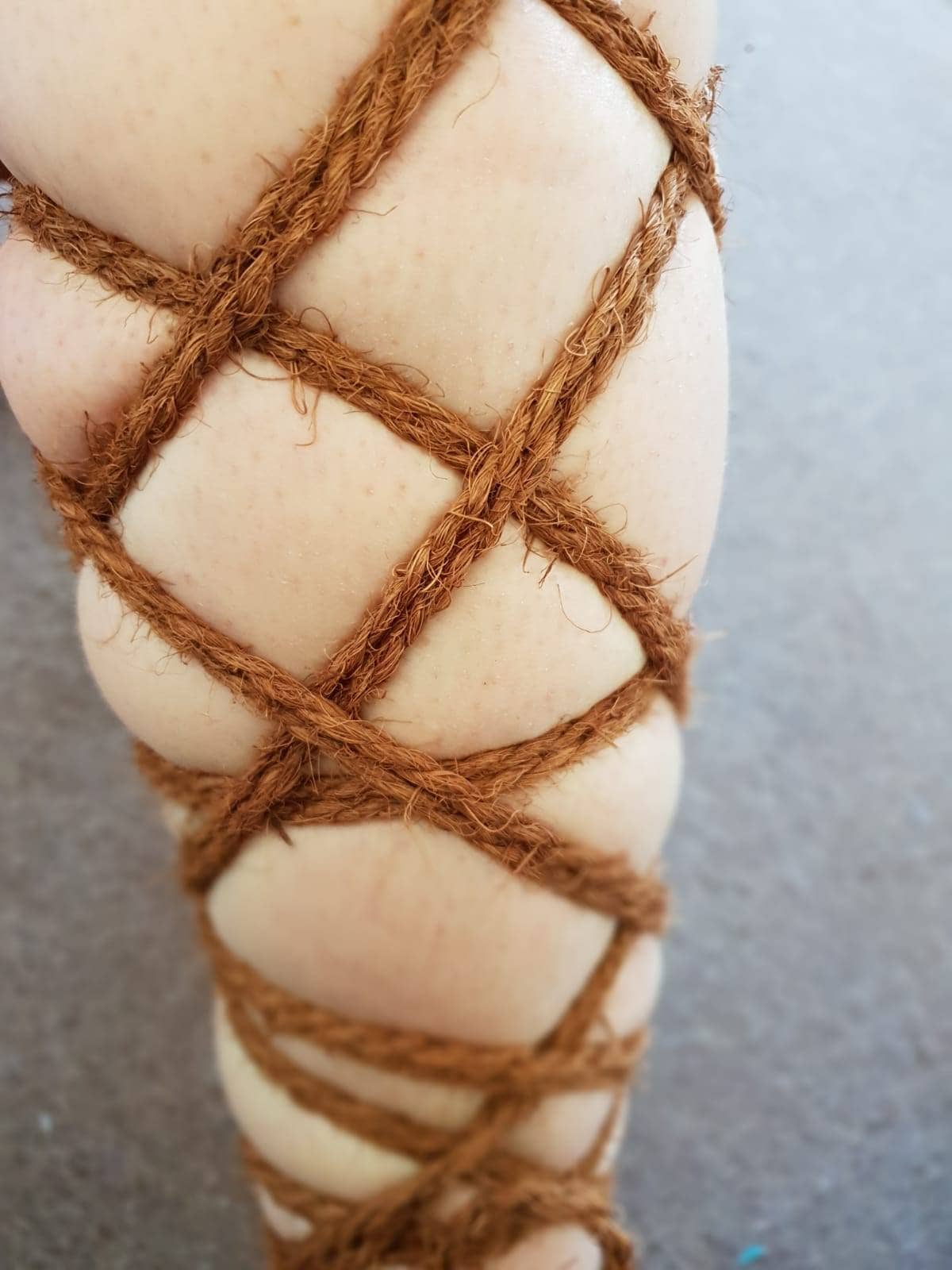
Semenawa 責め縄
Translation: “Tormenting rope”—sometimes translated as “torture rope”—refers to rope ties designed to create intentional discomfort or intense sensation through carefully placed, controlled pressure. When practiced skillfully and with close attention to safety, these ties can produce a deeply focused physical experience. In some cases, materials chosen for their rougher or less forgiving texture, such as palm rope, are used to further enhance the sensation.
Rope Used: Japanese Palm Rope -

Shinju shibari 真珠縛り
'pearl tie' used as a euphemism for breast, see breast bondage.
Rope Used: Galaxy 2ply Jute -
Snail tie
COMING Find out how to tieKnown in Japanese as Katatsumuri Shibari 蝸牛縛り this simple tie is a popular as a sexual position. This tie is accomplished by tying the arms together with a single or double column tie and drawing the arms between the legs.
-
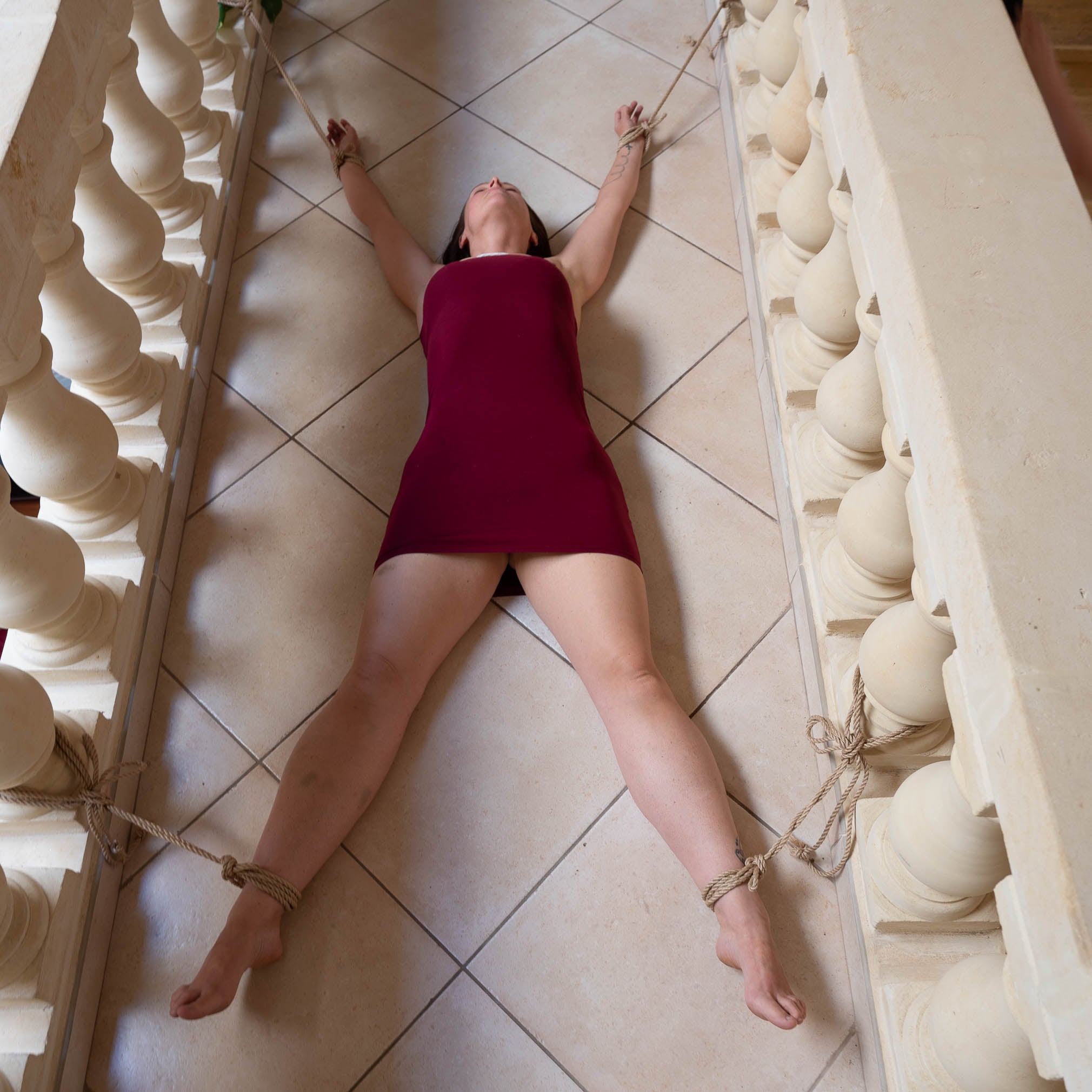
Spread Eagle
Ties in which the four limbs are tied independently to stretch out the person.
Rope Used: 1 Ply Jute Rope -
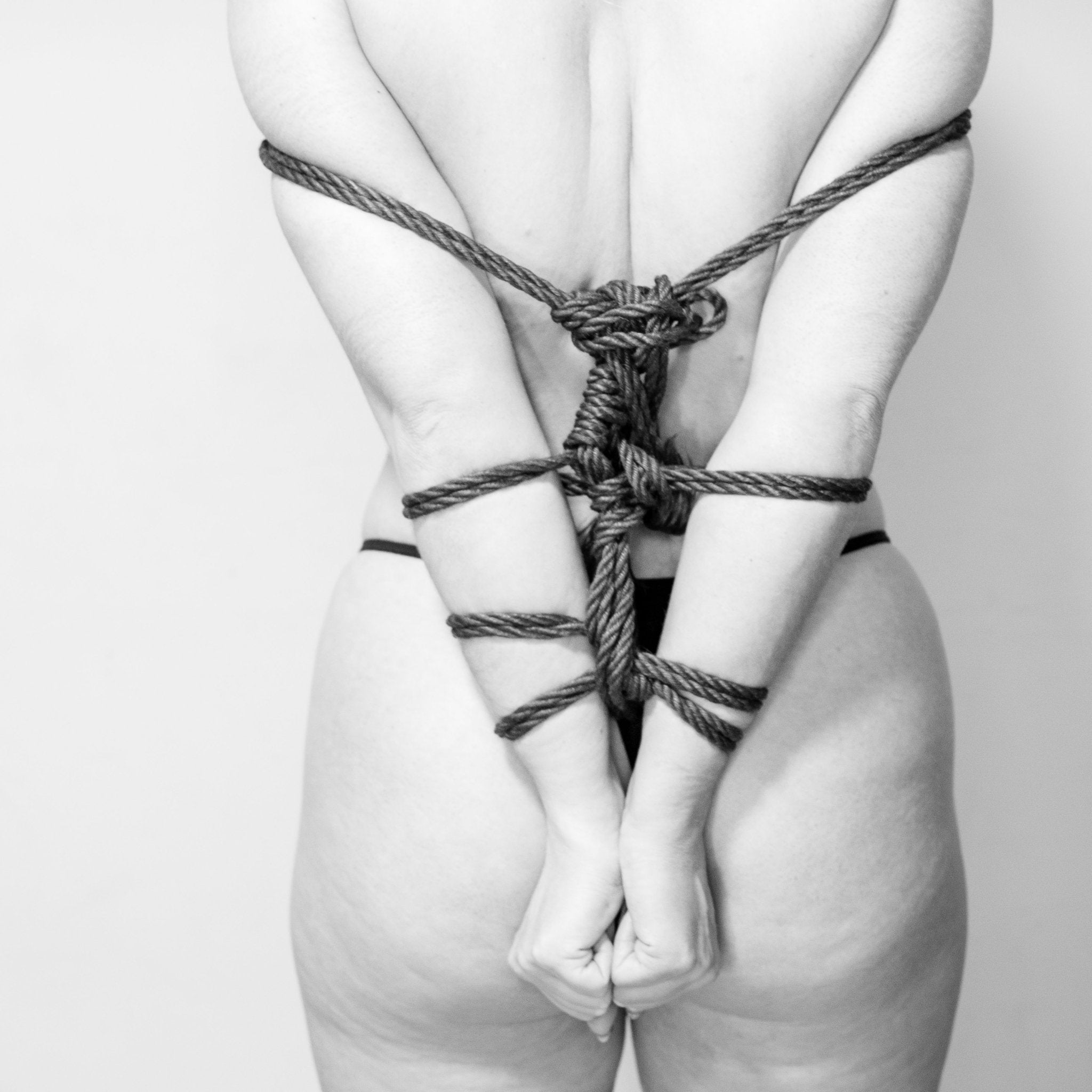
Strappardo
Arms tied straight elbows, behind back and often raised. Originally used as a method of torture with the hands raised behind the back.
-
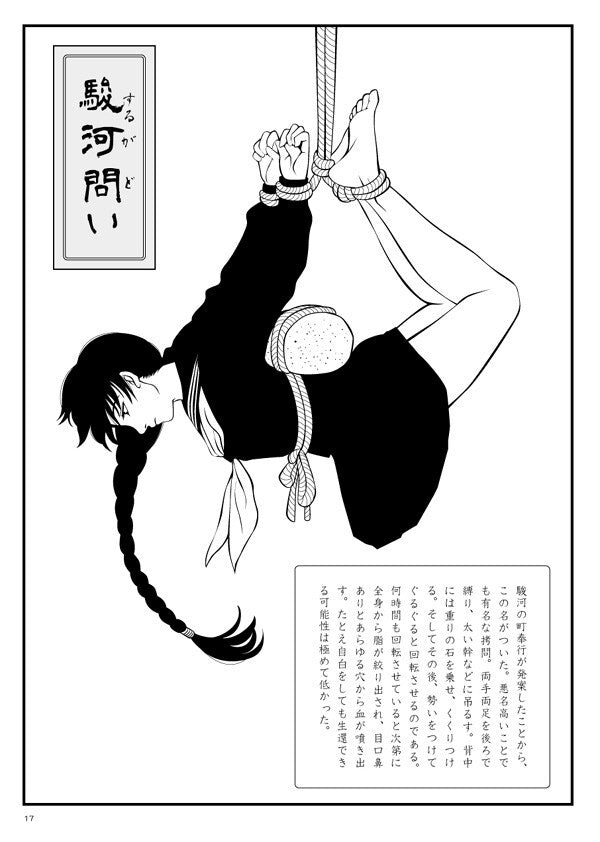
Suruga Shibari 駿河問い縛り
Suspension. Hands and Legs tied beind, weight placed on back.
-
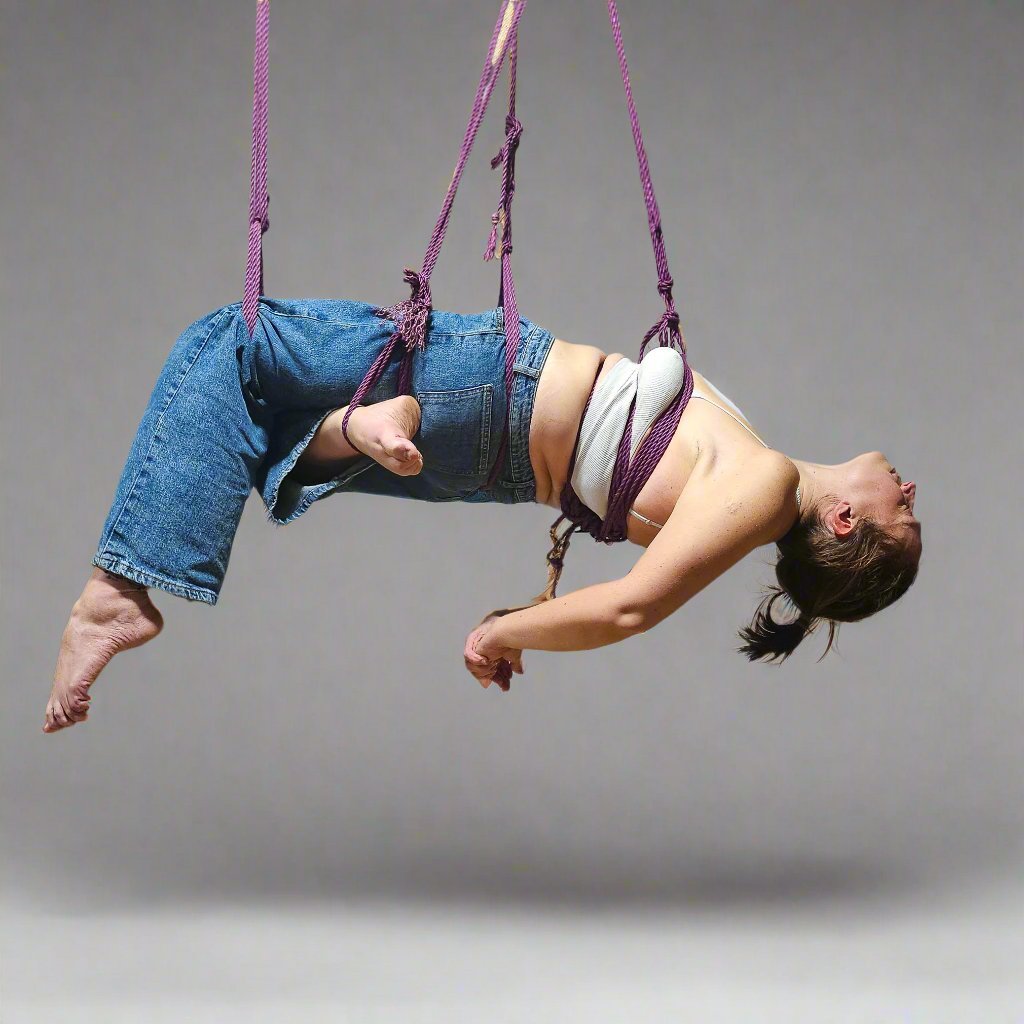
Suspension
any tie in which the person is suspended completely by ropes.
-
Tanuki zuri 狸吊り
Each arm and leg tied independently to suspension point to allow for a suspension from four limbs.
-
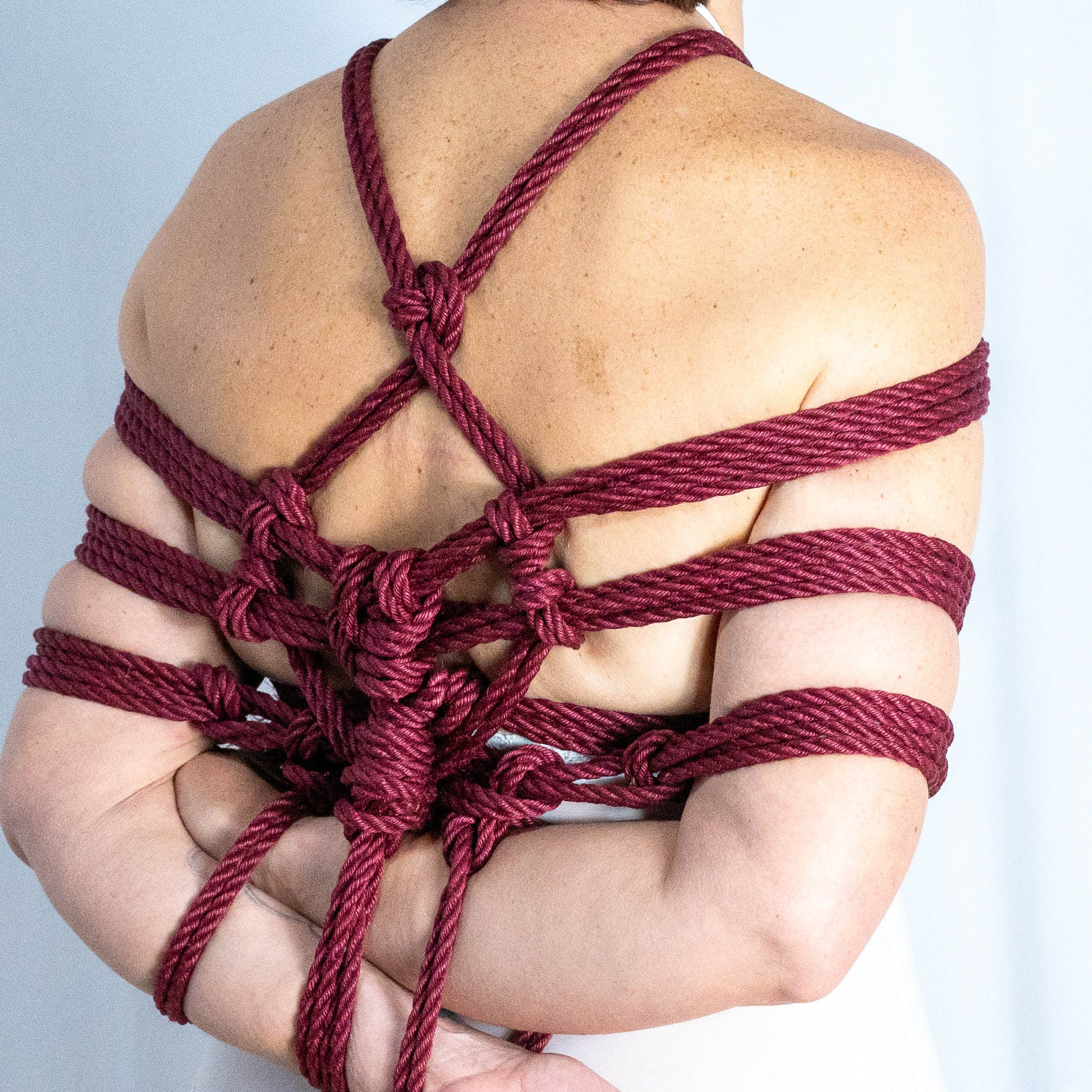
Takatekote 高手小手 たかてこて
A literal translation is 'high/upper hands small/lower hands'. This name tends to be applied to Gotes/Box ties which are tied using three ropes. Some particualar Ryu refer to the Gote tied in their particular style as a a Takatekote - and this is sometimes shortned to 3TK.
-
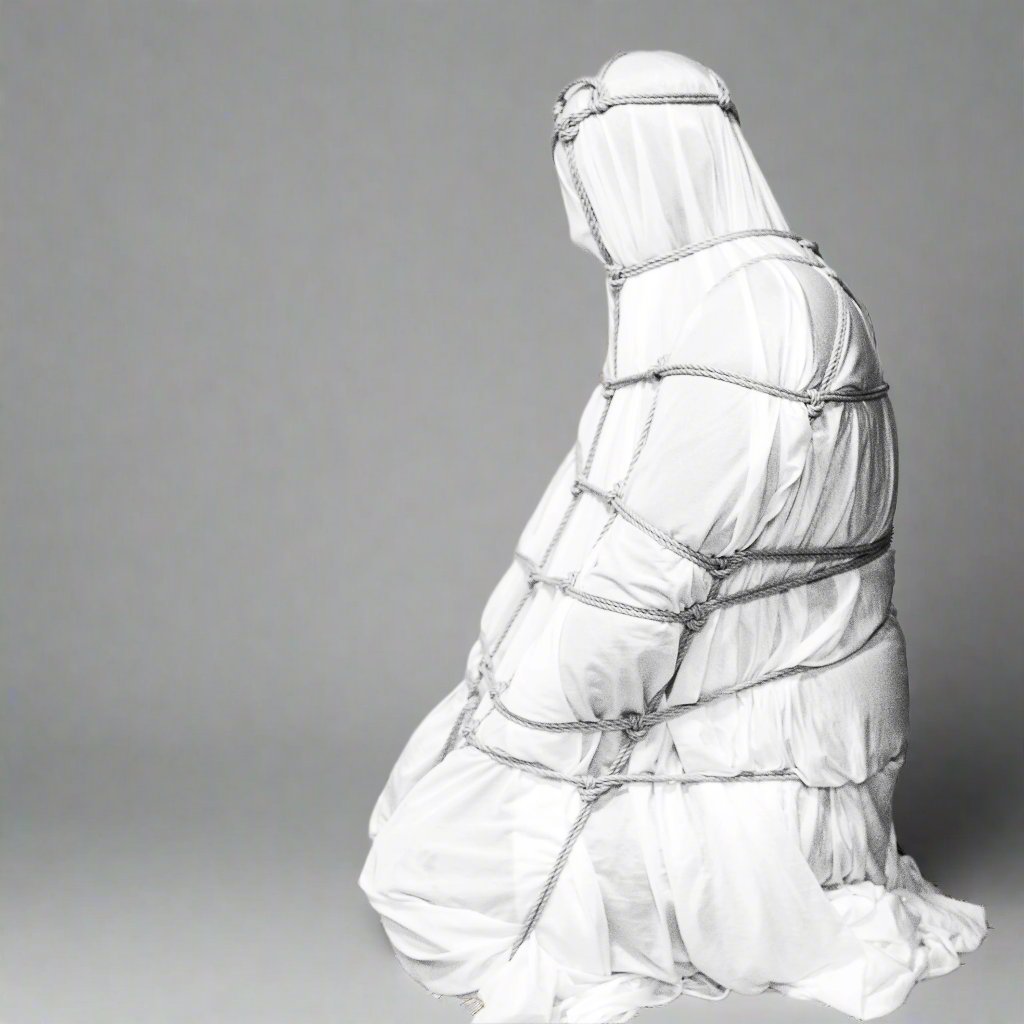
Tawara Shibari 俵縛り
Tied together like a ball of hay/straw.
-
Tejou Shibari 手錠縛り
Tied handcuffs
-
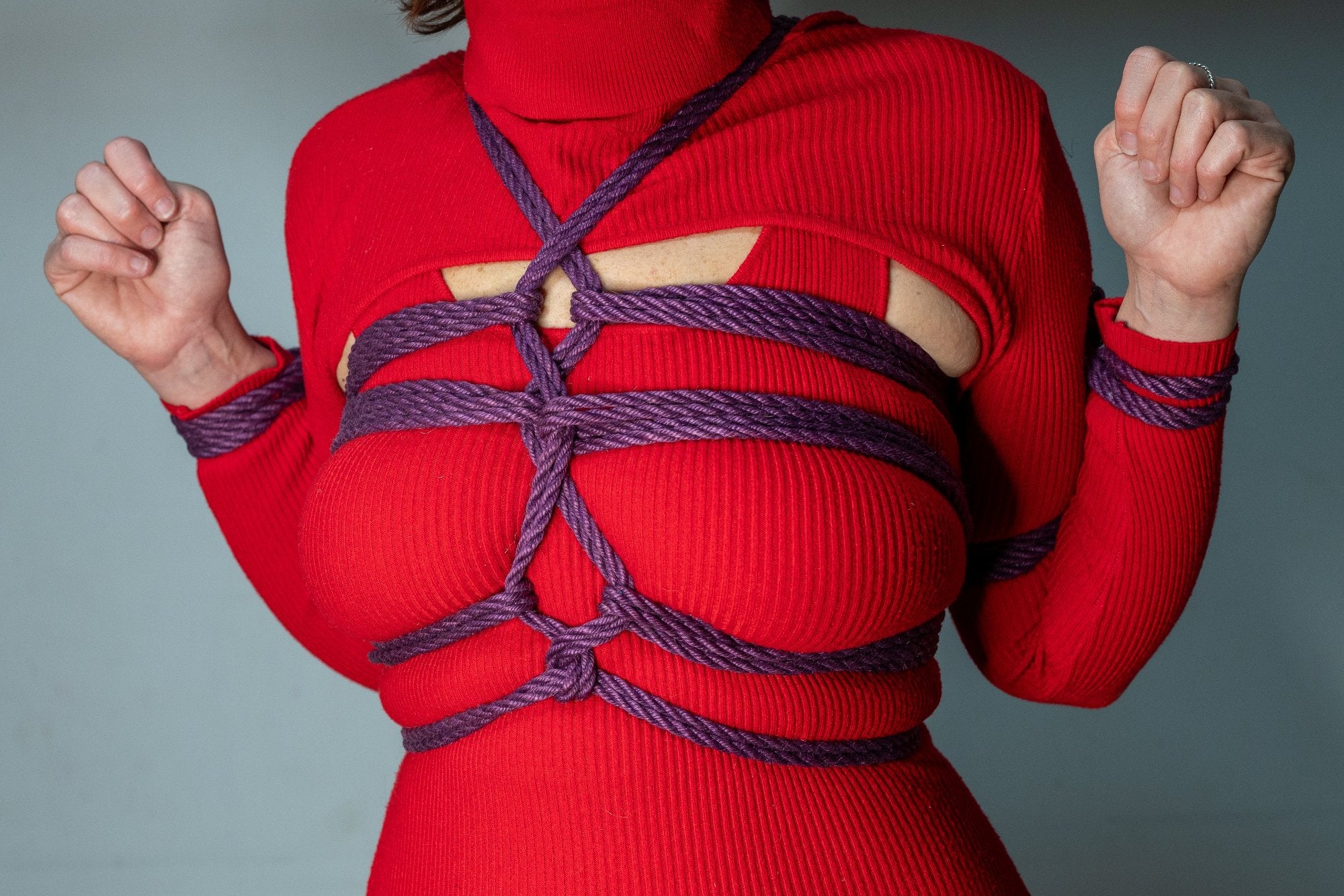
Tengu Shibari 天狗縛り
This refers to a tie in which the arms are bound with a rope that goes behind the hand to form the shape in the picture shown above.
-

Teppō Shibari 鉄砲縛り
Rifle Tie
-
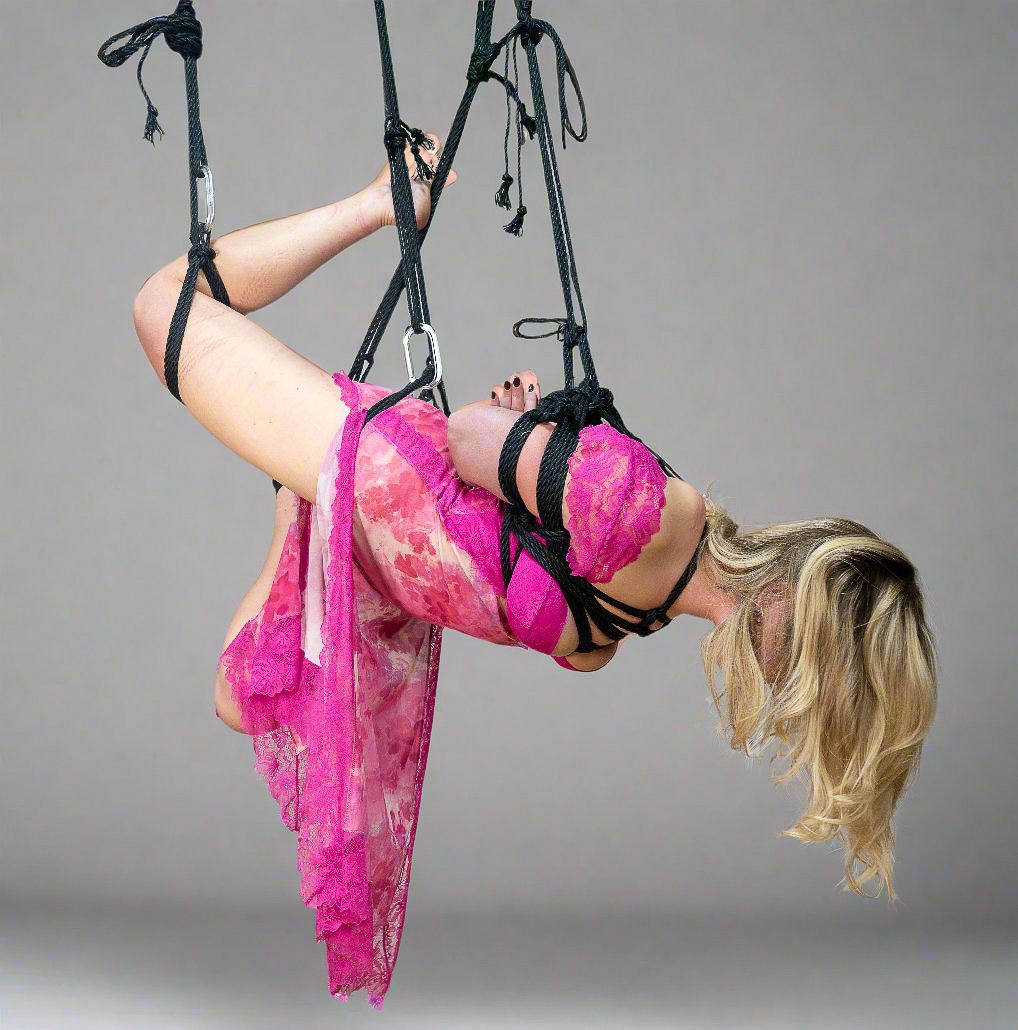
Tsuri
Translation: Any tie in which the body is fully lifted clear of the ground using ropes.
See suspension. When this term follows another word, it is written and pronounced as “zuri.”
Rope Used: Single Ply Raven Black Jute -
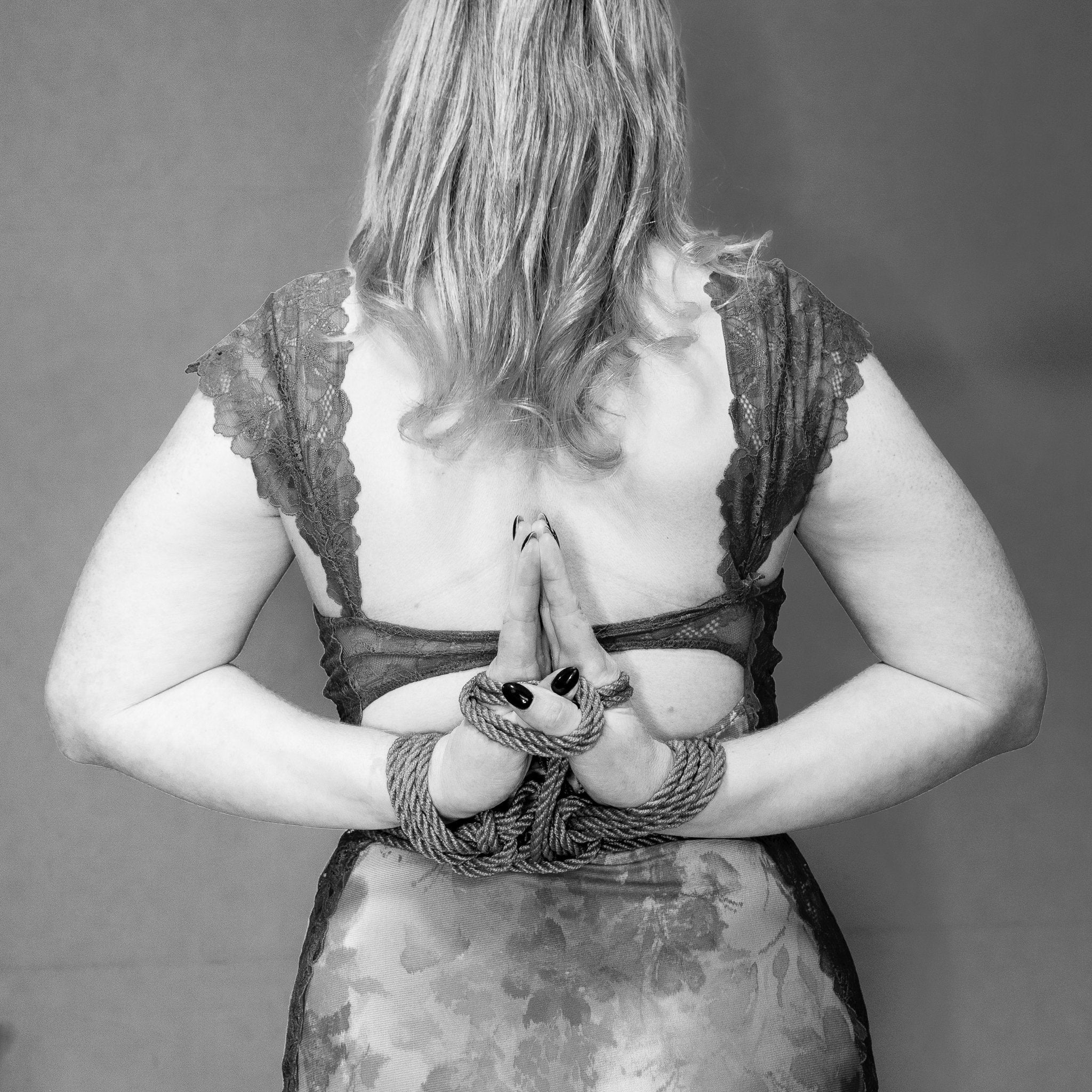
Uahirode-gassho(u) shibari
Reverse Prayer, any tie in which the hands are in a prater position behind the back.


-
Utsubuse zuri
Face down suspension
-
Yoko Zuri
Side suspension
-

Wakaizarashi
Translation: Literally meaning “young exposure” or “young display,” in Shibari it is most often translated as “armpit exposure.” A tie or posture in which the arms are drawn back—typically behind the body—opening the chest and exposing the underarms. This is far more taboo in Japan than in the West, where this tie is often referred to as bunny ears because of the shape formed by the elbows.
Rope used: Purple Berry Bliss -

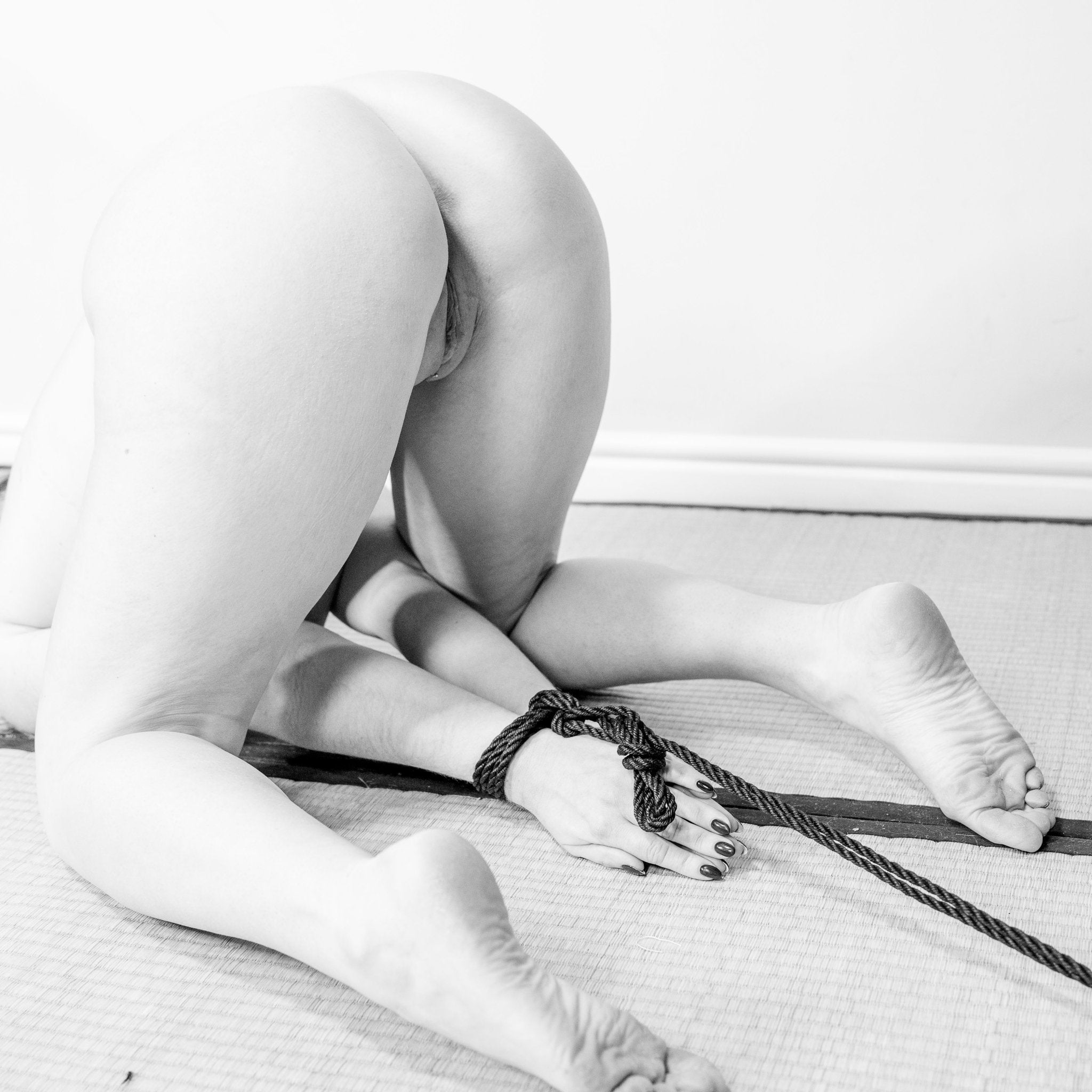
Yotsunbai 四つん這い
Translation: “On all fours.” A position in which a person is supported on both hands and knees.
Rope Used: 2ply Jute -
Yuka Shibari (床縛り)
Translation: “Floor tie.” A general term for ties performed on the floor or with the person supported by the ground, rather than suspended.
Rope Used: Bamboo Dreams

